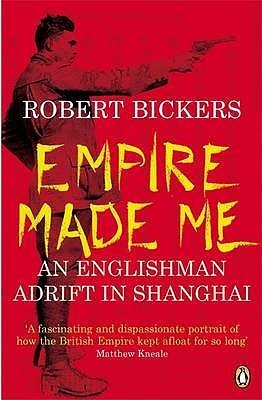
Empire Made Me
Book Description
Against the backdrop of a fading British Empire, "Empire Made Me" unveils the gripping saga of one man's journey through the shadows of colonial ambition. Robert Bickers deftly captures the chaos and moral dilemmas of an era defined by power and exploitation, where loyalty and betrayal intertwine in the most dangerous of games. As empires crumble and ambitions collide, the real cost of imperial dreams is laid bare, revealing the haunting echoes of history that still resonate today. Can the legacy of empire be rewritten, or are its lessons destined to be forgotten?
Quick Book Summary
"Empire Made Me" by Robert Bickers is a compelling exploration of the British colonial experience in China during the early 20th century, told through the life of William Ewart Fairbairn, a British policeman in Shanghai. Through Fairbairn's experiences, Bickers exposes the social complexities, personal dilemmas, and moral ambiguities inherent in Britain's imperial project. The book examines the harsh realities and contradictions of empire, delving into the intersections of racism, violence, and identity. It provides a detailed portrait of colonial life, the shifting power dynamics as empire waned, and the psychological and cultural costs for individuals and society alike. Bickers' narrative questions the lasting legacy of empire on both rulers and the ruled, offering a critical lens on historical memory and the lingering impacts on modern China and the West.


Summary of Key Ideas
Table of Contents
The Everyday Realities of Colonial Policing
Robert Bickers centers his narrative on William Ewart Fairbairn, a British police officer who spent his career in the International Settlement of Shanghai. Through Fairbairn’s eyes, the city becomes a microcosm of the British Empire’s ambitions, anxieties, and contradictions. The daily grind of colonial policing is detailed, from encounters with the local Chinese population to the complex relationships between foreign powers stationed in Shanghai. The work was grueling, often dangerous, exposing Fairbairn and his colleagues to the rampant criminality and racialized tensions fostered by colonial rule. Bickers situates Fairbairn’s life within the larger canvas of Shanghai’s colonial society, showing how British authority and prestige masked deep fragilities and persistent fears of disorder.
Identity, Racism, and Social Hierarchies
A central theme is the construction and negotiation of identity within the colonial milieu. Fairbairn, like many foreigners in Shanghai, straddled a precarious line between enforcing imperial order and internalizing its prejudices. His ascent through the police force reflects the rigid social hierarchies of the colonial setting, where race defined privilege and access. Bickers sheds light on the pervasive racism of the time, highlighting both the institutional discrimination directed at the Chinese population and the subtle ways it shaped expatriate identity. Yet, colonial life also bred its own discontents, as personal loyalties and ambitions clashed with the dehumanizing routines of empire.
Violence, Morality, and Authority
Violence threads through Fairbairn’s story and serves as a harsh tool of empire. The book explores how violence was both normalized and rationalized by colonial authorities, justified as a means of preserving order but also revealing the moral ambiguity at the heart of imperial rule. Fairbairn’s development of hand-to-hand combat techniques epitomizes the era’s blending of innovation with brutality. Bickers interrogates the psychological toll this environment exacted on individuals, exposing how cycles of violence and authority perpetuated trauma and bred further resentment within both colonizers and the colonized.
The Decline of Imperial Power
As geopolitical tides shifted and World War II loomed, Bickers chronicles the decline of British and Western imperial influence in Shanghai. The upending of colonial certainties is palpable—the old order erodes, local power grows, and foreign residents face unprecedented challenges. Fairbairn’s career and the fate of the expatriate enclave reflect the broader unraveling of empire: illusions of control shatter, revealing the limits of power and the inevitable need for adaptation or retreat amid nationalist resurgence.
Legacies of Empire and Historical Memory
The book closes by reflecting on the legacies of British imperialism in China. Bickers considers how stories like Fairbairn’s, often forgotten or mythologized, shape our understanding of history and identity. The legacy of violence, prejudice, and cultural exchange continues to influence East-West relations. "Empire Made Me" ultimately compels readers to confront the moral complexities of imperial ambition and recognize the enduring shadows cast by colonial history on contemporary affairs.
Download This Summary
Get a free PDF of this summary instantly — no email required.