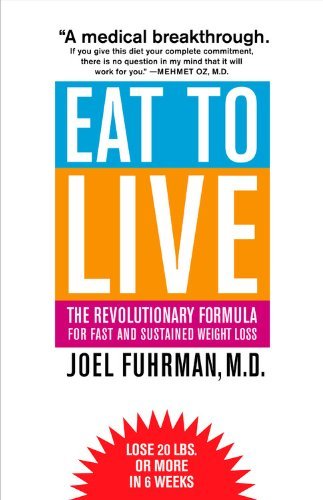
Eat to Live: The Revolutionary Formula for Fast and Sustained Weight Loss
Book Description
Transform your life with each bite! "Eat to Live" unveils the shocking truth behind food, weight loss, and health, offering a revolutionary formula that promises not just quick results, but lasting change. Dive into a world where nutrient-dense foods reign supreme, and discover how a diet shift can obliterate excess weight while boosting vitality. With every page, the secrets to combating cravings and unlocking true wellness unfold, challenging everything you thought you knew about dieting. Are you ready to reclaim your health and embrace the vibrant life you deserve?
Quick Book Summary
"Eat to Live" by Joel Fuhrman is a groundbreaking guide that challenges traditional dieting by focusing on the concept of nutrient density. Fuhrman advocates for consuming foods loaded with vitamins, minerals, and antioxidants, especially vegetables, fruits, beans, and nuts, over calorie-rich, nutrient-poor processed foods. The book asserts that prioritizing high-nutrient foods leads to rapid and sustainable weight loss, improved health markers, and a dramatic reduction in the risk of chronic diseases. Fuhrman provides a strategic six-week plan to transition to this eating pattern, offering practical advice, meal plans, and recipes. Ultimately, "Eat to Live" empowers readers to break free from food addictions and cravings, promising a lifestyle that promotes true, long-term wellness rather than temporary fixes.



Summary of Key Ideas
Table of Contents
Nutrient Density as the Key to Weight Loss
Joel Fuhrman’s approach in "Eat to Live" centers on the principle of nutrient density: maximizing the intake of nutrients per calorie consumed. He argues that most conventional diets overlook this concept, leading to caloric excesses without sufficient nourishment. Fuhrman introduces the Health Equation (Health = Nutrients/Calories), establishing that consuming foods with a high ratio of nutrients to calories is the foundation for effortless weight loss and superior health. This underpins his encouragement of whole plant foods, especially leafy greens, colorful vegetables, and beans, as dietary staples.
Breaking the Addiction to Unhealthy Foods
Processed foods and excessive animal products are criticized as the primary contributors to obesity and chronic disease. Fuhrman details the addictive quality of these modern foods—high in salt, sugar, and fat—which hijack the brain’s reward system and perpetuate overeating and weight gain. He explains how breaking free from these addictive cycles is critical for sustainable weight loss and how whole, unprocessed foods naturally reduce cravings over time, fostering a normalized appetite and better relationship with food.
The Dangers of Processed and Animal-Based Diets
Fuhrman offers a structured, six-week plan designed to transition individuals to a nutrient-dense, plant-based diet. This plan includes specific guidelines for food choices, quantities, and meal timing, emphasizing leafy greens, beans, fruits, and raw nuts, while minimizing or eliminating processed foods and animal products. The book provides meal plans, recipes, and practical tips, making implementation accessible regardless of previous culinary experience. Fuhrman also discusses common challenges, such as social pressures and eating out, equipping readers with strategies for real-world success.
The Six-Week Eat to Live Plan
Importantly, "Eat to Live" presents compelling evidence from scientific literature and Fuhrman’s clinical practice, illustrating the diet’s ability to reverse or mitigate type 2 diabetes, heart disease, hypertension, and other lifestyle diseases. The book highlights patient success stories and clinical outcomes, reinforcing the sustainability and effectiveness of the Eat to Live formula, even for those with longstanding health issues or significant weight to lose.
Sustaining Weight Loss and Health for Life
The final sections of the book focus on long-term maintenance, emphasizing that the Eat to Live plan is not a temporary diet, but a lifelong approach to health and weight management. Fuhrman outlines strategies for maintaining motivation, navigating setbacks, and deriving ongoing pleasure and satisfaction from nutrient-rich foods. The ultimate goal is to help readers reclaim their health, ensuring not just a slimmer physique, but a life of enduring energy, reduced healthcare risks, and optimal well-being.
Download This Summary
Get a free PDF of this summary instantly — no email required.