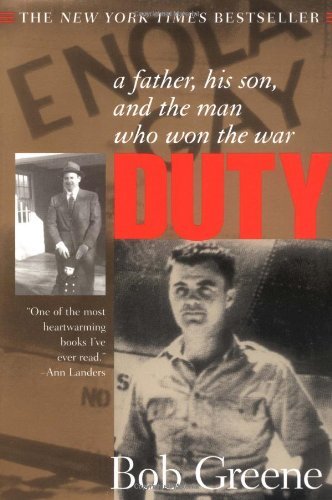
Duty: A Father, His Son, and the Man Who Won the War
Book Description
What does it mean to honor a legacy steeped in sacrifice? In "Duty: A Father, His Son, and the Man Who Won the War," Bob Greene delves into the profound bond between a father and son, forged amid the shadows of history and the reverberating echoes of valor. As the son grapples with the weight of his father's heroic past, a gripping journey unfolds that explores duty, sacrifice, and the unbreakable ties that bind generations. With every revelation, the stakes rise, challenging the very definitions of bravery and honor. Will the truth reshape their relationship, or shatter it forever?
Quick Book Summary
"Duty: A Father, His Son, and the Man Who Won the War" is Bob Greene's deeply personal exploration of family, legacy, and the meaning of sacrifice. Greene reflects on his relationship with his father, a World War II veteran, delving into questions of duty both on the battlefield and at home. As Greene seeks to understand the silent heroism of his father’s generation, he sets out to meet Paul Tibbets, the man who piloted the Enola Gay and dropped the atomic bomb on Hiroshima. Through these intertwined narratives, Greene examines how history’s largest events echo through the most private corners of family life. The book is a heartfelt meditation on gratitude, honor, and wrestling with the burdens and gifts passed from one generation to the next.




Summary of Key Ideas
Table of Contents
The Complex Legacy of Parental Sacrifice
Bob Greene’s narrative opens with reflections on his relationship with his father, juxtaposed with the cultural silence that many postwar families experienced regarding the traumas of World War II. He contemplates the unspoken burdens carried by his father and how these shaped the fabric of their family life. As he details everyday moments—coaching little league, daily routines—Greene gradually becomes aware of the vast, invisible weight his father bore as a man shaped by war.
Unspoken Bonds Between Generations
This personal quest for understanding leads Greene to pursue a meeting with Paul Tibbets, the pilot of the Enola Gay, whose act ended one war but began decades of ethical debate. Greene’s interviews with Tibbets reveal not only the man behind the mission but the profound sense of duty that colored the choices of an entire generation. Through their conversations, Greene seeks to understand how Tibbets reconciled his own role in history with the unending moral questions that followed.
The Morality of Duty in War and Peace
Running parallel to the story of Tibbets are Greene's meditations on what it means to be a “good son.” He struggles with the inevitability of generational distance and with the muted ways men, especially veterans, express love and legacy. Greene ponders whether the code of silence observed by his father and others was an act of mercy for their children, or a barrier that prevented deeper understanding. He explores how children inherit, by osmosis or intention, the legacies left by their parents—heroic or otherwise.
Understanding History Through Personal Stories
The book expands beyond the Greene family to address collective memory and the price of moral clarity. Greene questions whether society does justice to the sacrifices of its “Greatest Generation,” or whether the uneasy legacy of decisions like Tibbets’s obscures the simpler narrative of heroism. He explores how grand gestures of history, such as dropping the atomic bomb, intersect messily with private grief, gratitude, and unresolved pain at home.
Reckoning with Heroism and Its Costs
In the end, Greene finds that embracing duty—and the complicated truths it brings—offers a measure of reconciliation. Through accepting the imperfect communication between father and son, and recognizing the generational heft of decisions made in war, he comes to understand that honoring sacrifice is not about easy answers but about bearing witness, asking questions, and cherishing the enduring, if sometimes silent, bonds of family and history.
Download This Summary
Get a free PDF of this summary instantly — no email required.