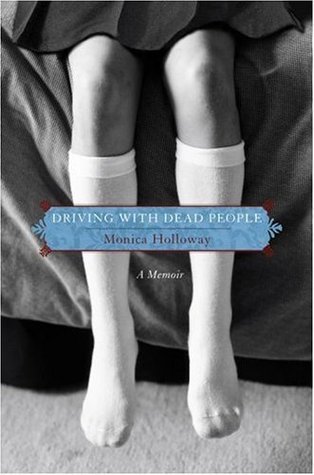
Driving with Dead People
Book Description
In a world where the living and the dead collide, Monica Holloway's 'Driving with Dead People' takes readers on a haunting ride through grief and resilience. A daughter’s turbulent relationship with her mother is upended when a shocking revelation about family ties unfolds against a backdrop of loss and love. As secrets unravel in the rearview mirror, each mile driven deepens the emotional stakes and challenges the boundaries of life and death. Can she confront the ghosts of her past and navigate the road ahead, or will she be eternally trapped in the shadows? What happens when the truth is inescapable?
Quick Book Summary
"Driving with Dead People" is Monica Holloway’s piercing memoir chronicling her tumultuous childhood and adolescence in a family haunted by neglect, secrecy, and unresolved grief. Raised in a household overshadowed by emotional distance and her mother’s inscrutability, Holloway seeks solace and understanding outside her fractured home, often in morbid fascinations and in friendships shaped by death. As she uncovers disturbing family secrets and copes with her father’s troubling behavior, Holloway wrestles with the grief of lost innocence and the hope of forging her own identity. The book is both a harrowing and darkly humorous coming-of-age narrative that explores how confronting the ghosts of one’s past is essential to forging a path forward. Ultimately, Holloway’s resilience and vulnerability offer a testament to the possibility of healing in the aftermath of familial trauma.






Summary of Key Ideas
Table of Contents
Coping with Familial Dysfunction
Monica Holloway’s memoir plunges readers into the disquiet of her childhood home. From an early age, Holloway is immersed in an environment charged with emotional absence, secrecy, and constant chaos. Her mother stands as a distant and often cold figure, offering little comfort amid the turbulence. The tension with her parents informs Monica’s earliest experiences and shapes her worldview, leading her to look outside her family for validation and safety. Her proximity to death—actual and figurative—serves as both an escape and a way to comprehend her feelings of alienation.
Secrets, Trauma, and Grief
A profound sense of loss permeates Holloway’s narrative. Whether it’s the physical losses of people around her or the figurative death of innocence, Monica is repeatedly forced to reckon with grief before she understands its full implications. The revelation of family secrets, especially concerning her father’s predatory tendencies and the complicity or denial surrounding him, deepens her sense of betrayal. These truths come to light slowly and painfully, challenging Monica’s perceptions of loyalty, trust, and self-worth as she progresses toward adulthood.
Search for Belonging and Identity
Amid this turmoil, Holloway’s coping mechanisms reflect both creativity and desperation. She develops a morbid sense of humor and an obsession with death—a theme that manifests in her friendship with Julie, whose family funeral home becomes a strange sanctuary. In Julie’s house, surrounded by reminders of mortality and the rituals of bereavement, Monica finds a bizarre form of comfort and understanding that her own family can’t provide. Death, for Monica, becomes a metaphor for transformation and an escape from her painful reality.
Death as Obsession and Metaphor
As Holloway grows, her need to belong and define herself becomes ever more urgent. She navigates friendship, first love, and disappointment, all under the shadow of her family’s dysfunction. The social isolation from her own home pushes her to seek connection and meaning elsewhere, often bringing her into emotionally risky or misunderstood territory. Each relationship and revelation nudges her closer to self-realization and a reckoning with her family’s influence on her evolving identity.
Resilience and Surviving the Past
Through the act of storytelling and self-reflection, Holloway ultimately discovers the power of resilience. By facing her painful past and openly interrogating her memories and emotions, she carves a pathway toward healing. The process is neither smooth nor linear, but her courage in exposing family secrets represents a reclaiming of agency. The memoir concludes with a sense of hope—despite the darkness she’s confronted, Monica’s journey is a testament to surviving trauma and finding the strength to move forward, driving with and ultimately beyond the dead who haunt her story.
Download This Summary
Get a free PDF of this summary instantly — no email required.