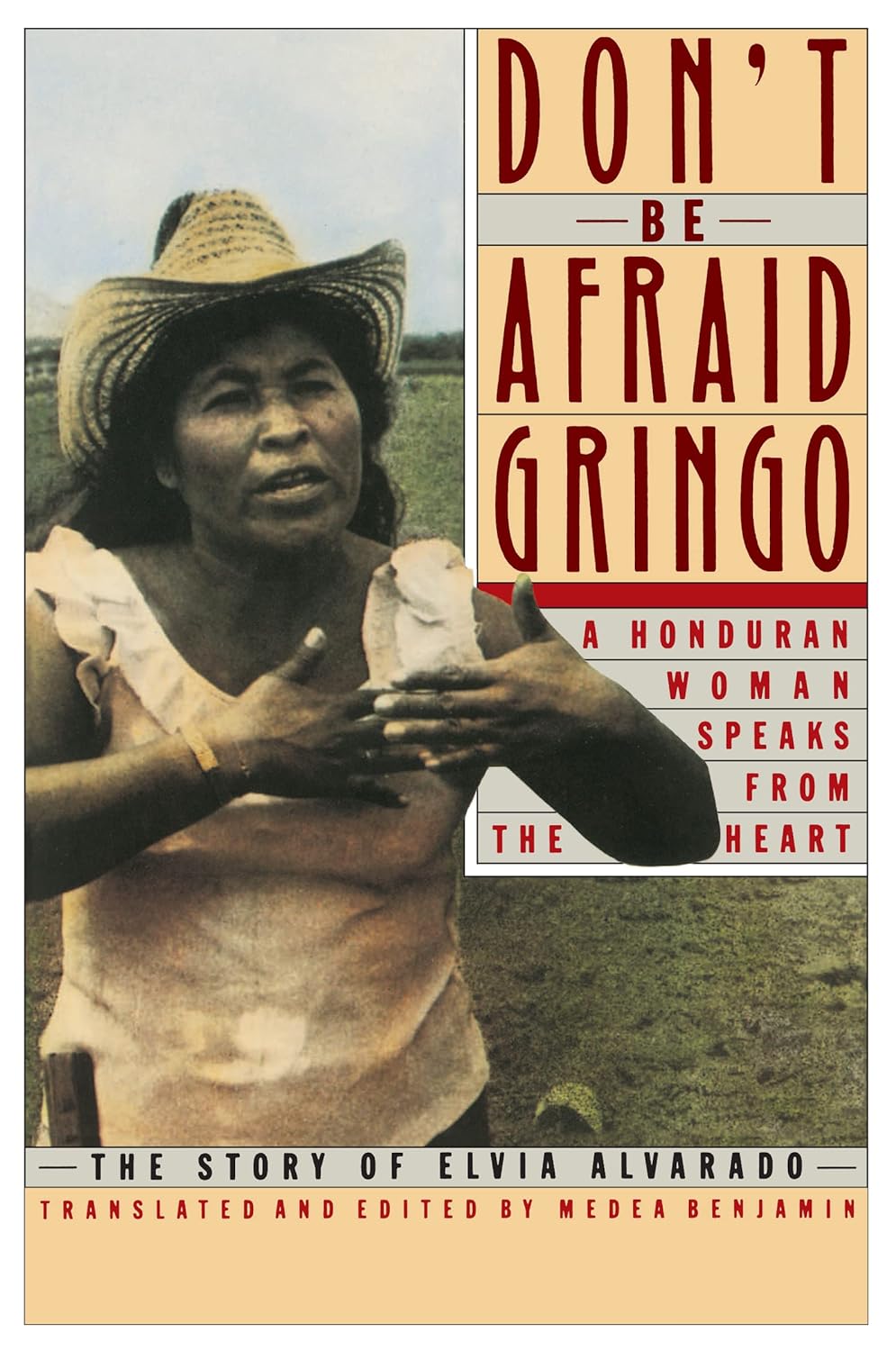
Don't Be Afraid, Gringo
Book Description
Fear grips a small Nicaraguan village as powerful forces clash over land and rights, leaving struggles and sacrifices in their wake. Elvia Alvarado paints a vivid portrait of resilience and defiance in “Don't Be Afraid, Gringo,” where the fight for justice intertwines personal stories of hardship, hope, and unwavering courage. Amidst the chaos, bonds are tested as communities rally against oppression, each day a battle that could change everything. Will the fire of revolution ignite a new dawn, or will despair extinguish the dream of freedom? The stakes have never been higher—who will rise to the challenge?
Quick Book Summary
"Don't Be Afraid, Gringo" is the compelling memoir of Elvia Alvarado, a Honduran campesina (peasant) and activist, who narrates her life of struggle and resilience amidst oppressive political regimes and social injustices in rural Central America. Through firsthand experiences, Alvarado exposes systemic poverty, corruption, and the hardships faced by campesino communities fighting for land rights and social change. The book chronicles her personal journey—from impoverished beginnings to becoming a leader in the Honduran peasants' movement—highlighting both personal sacrifices and community solidarity. Her candid storytelling brings to life the intersection of gender, class, and race, as well as the broader political and historical context of U.S. involvement in Central America. Ultimately, "Don't Be Afraid, Gringo" is a testament to hope and unyielding defiance in the face of adversity.




Summary of Key Ideas
Table of Contents
Land Struggles and Campesino Activism
Elvia Alvarado's life unfolds against the poverty-stricken backdrop of rural Honduras, where landlessness and hunger torment the campesino population. She details her childhood, raised by a single mother and forced into labor at a young age, revealing deep-rooted inequalities as a constant reality. Through vividly recounted events, Alvarado illustrates how the lack of access to land and basic resources drives entire families to resist oppressive landowners and an indifferent government. Her experiences expose readers to the daily grind of survival in a setting where education, health care, and even the right to subsistence are never guaranteed.
Gender and Women's Role in Social Movements
Alvarado becomes deeply involved in campesino activism, working alongside grassroots organizations to demand land reform and advocate for fairer resource distribution. Her role as a community organizer is risky, drawing the ire of local elites and government forces. Yet, the resilience and unity among peasants, who organize marches, strikes, and occupations despite repression, become central. The narrative details struggles with corrupt officials, betrayals, and the frequent threat of violence. In sharing stories of both failure and triumph, she underscores the significance of collective action and the transformative power of hope in igniting change.
Daily Hardships and Survival
Gender plays a pivotal role in Alvarado's journey, as she confronts a deeply patriarchal society that tries to silence and marginalize women. Initially reluctant to assume leadership, Alvarado grows into her role as an outspoken activist, challenging gender norms not only in her community but within the campesino movement itself. She highlights the specific hardships faced by women: exploitation, domestic abuse, and lack of opportunity. However, women's involvement proves critical to sustaining the struggle, as they orchestrate protests, support families, and often bear the frontline consequences of political backlash.
Political Repression and State Violence
Political repression casts a long shadow throughout Alvarado's account. Military intimidation, kidnappings, and disappearances become grimly familiar. She documents how campesino leaders and activists are targeted by security forces, who serve the interests of wealthy landowners and the state. The toll on communities is immense, but fear does not entirely quell resistance. Alvarado illustrates how defiance persists even when hope wavers, and recounts moments of solidarity and courage in the face of terror. The personal risks are constant, but she believes strongly in standing up for what is right.
International Involvement and Solidarity
Alvarado contextualizes her struggle within the wider framework of Central American politics, drawing connections to U.S. policies and interventions, including U.S. military aid and support for oppressive regimes. She appeals to international solidarity, urging the global community not to ignore the plight of Honduras’ poor. Through her storytelling, "Don't Be Afraid, Gringo" becomes both a memoir and a call-to-action, urging readers to recognize their role in the ongoing fight for justice, land, and dignity for campesinos everywhere.
Download This Summary
Get a free PDF of this summary instantly — no email required.