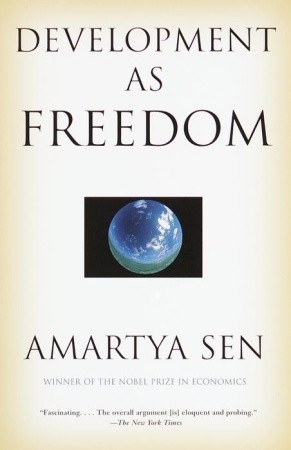
Development as Freedom
Book Description
Imagine a world where true freedom means more than just the absence of chains. In "Development as Freedom," Amartya Sen challenges the conventional wisdom that ties economic growth to human progress. He reveals how the power to make choices in life fuels societal transformation and individual dignity. With gripping examples and provocative insights, Sen dismantles barriers to development—from poverty and inequality to education and gender. The stakes are high, as entire nations grapple with the balance between wealth and welfare. Can a society flourish when its people are bound by constraints? Discover the liberating potential of development as you turn the pages.
Quick Book Summary
"Development as Freedom" by Amartya Sen redefines development by asserting that real progress is best understood through the expansion of people's freedoms rather than the accumulation of wealth. Sen critiques narrow economic measures like GDP, arguing they overlook fundamental aspects of human life such as health, education, and political freedoms. He introduces the capability approach, which emphasizes what individuals are able to do and be—their substantive freedoms. The book explores how poverty, social inequality, lack of access to healthcare, and limited educational opportunities negatively impact personal agency. Sen’s analysis spans global examples, highlighting that empowering people to make choices is key to sustainable, meaningful development. By positioning freedom as both the primary goal and means of development, the book offers a human-centered framework for policymakers.


Summary of Key Ideas
Table of Contents
The Capability Approach to Development
Sen begins by challenging the conventional wisdom that equates development solely with economic growth. He argues that standard indicators like income per capita or GDP fail to capture the true essence of human progress. Instead, Sen proposes that development should be assessed by the expansion of fundamental freedoms—such as political participation, access to health care, and education—which empower individuals to pursue their valued goals. This reorientation shifts the focus from wealth accumulation to enhancing human agency and dignity.
Freedom as Both Means and End
The cornerstone of Sen’s argument is the 'capability approach.' Capabilities refer to the substantive freedoms individuals have to lead the lives they have reason to value. Sen contends that increasing people’s capabilities—such as being healthy, literate, and politically active—is the real objective of development. In this context, poverty is seen not just as a lack of income but as deprivation of basic freedoms, which restricts one’s ability to make meaningful choices in life.
The Multidimensional Nature of Poverty
Sen highlights the multidimensional aspects of poverty, emphasizing that factors like illiteracy, malnutrition, and social exclusion contribute to deprivation. He illustrates these concepts with case studies ranging from famine in China to gender inequality in India, demonstrating how lack of freedom undermines well-being and hampers development. Addressing poverty, therefore, requires holistic interventions that improve people’s capabilities, not just their incomes.
The Role of Political and Social Institutions
Political and social institutions play a critical role in expanding freedoms. Sen points out that democratic governance, transparency, and the rule of law are essential for safeguarding individual rights and providing opportunities for participation. Fair and inclusive institutions help ensure that economic growth leads to widespread benefits rather than entrenching existing inequalities. Social policies that promote equal access and justice are key to sustainable development.
Empowerment Through Education and Health
The book concludes by asserting that access to basic education and healthcare forms the bedrock of personal and societal empowerment. By investing in human capital, societies enable their citizens to escape cycles of deprivation and participate meaningfully in economic and political life. Sen urges policymakers to adopt a people-centered approach to development, where expanding freedoms—rather than merely increasing income—becomes the main goal, paving the way for richer, more just societies.
Download This Summary
Get a free PDF of this summary instantly — no email required.