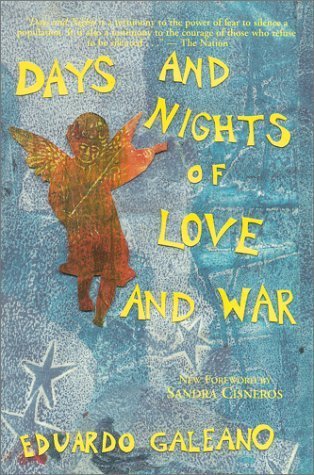
Days and Nights of Love and War
Book Description
Love blossoms amidst chaos, where hearts beat louder than the sound of gunfire. Eduardo Galeano's 'Days and Nights of Love and War' is a powerful tapestry of human resilience woven through war-torn landscapes. Each page reveals the intimate struggles and fierce passions of those living on the edge, caught between the brutality of conflict and the tenderness of connection. In this vivid exploration of Latin America, fate intertwines lovers and dreamers, leaving a haunting question lingering: what sacrifices will they make in the name of love when the world around them crumbles?
Quick Book Summary
"Days and Nights of Love and War" by Eduardo Galeano is a deeply personal and poetic narrative chronicling the author's experiences amid political turmoil in Latin America during the 1970s. Blending memoir, journalism, and literary vignettes, Galeano brings to life the struggles of those resisting oppressive regimes. The book is an evocative testament to the enduring spirit of individuals who confront violence, censorship, exile, and the constant threat of death. Yet, amidst the terror and suffering, themes of love, solidarity, and hope shine through. Galeano captures the contradictions of living under dictatorship—the agony and ecstasy of daily existence—highlighting the collective power found in personal bravery and emotional connection.


Summary of Key Ideas
Table of Contents
Life under political oppression
Galeano’s work opens with an intimate portrayal of the daily realities faced by individuals under dictatorship. Through a mosaic of anecdotes, observations, and reflections, the narrative reveals the constant tension between danger and desire for freedom. People navigate censorship, surveillance, and violence, always measuring trust and hope against the risks of betrayal and loss. Galeano describes these relentless pressures with raw honesty, revealing how fear permeates even moments of everyday ordinary life, weaving itself into friendships, relationships, and family.
The resilience of hope and love
Despite the bleakness of oppression, the book pulses with instances of human resilience and the transformative power of hope. Galeano spotlights moments of solidarity—acts of kindness, bursts of humor, and fleeting romance that flourish even in the darkest times. Love, depicted both romantically and communally, sustains the spirits of those facing terror. These connections become acts of defiance, ways to reaffirm humanity when it seems most threatened. Galeano demonstrates how love and compassion can persist amid chaos, kindling the possibility of a better future.
Bearing witness and storytelling as resistance
Central to the book is the concept of bearing witness, with Galeano positioning himself as both participant and chronicler. The fragmented, poetic structure allows him to catalogue not only his own memories but also the stories of the disappeared, the persecuted, and the brave who dared to resist. Storytelling itself is portrayed as resistance: an act that keeps memory alive and reclaims dignity for those silenced by terror. Galeano’s pen becomes a weapon against forgetting, ensuring that the struggles and dreams of Latin America’s people are not erased.
The struggle for justice and memory preservation
Throughout, the narrative insists on the importance of justice, both historical and social. Galeano weaves personal loss and political critique into a call for accountability and remembrance. The stories he shares—full of suffering, sacrifice, and sometimes triumph—remind readers that the fight for human rights is ongoing and that justice relies on collective memory. The preservation of these stories becomes a duty, affirming the value of every life touched by conflict.
In its final passages, the book contemplates survival and the way forward. Even as the world crumbles, Galeano suggests that resistance is possible through solidarity, love, and the unyielding pursuit of truth. He invites readers to honor the courage of those who persist—those who, despite the odds, choose to dream and act for a more just and compassionate world. The work stands as a pulsating homage to both the frailty and strength of the human heart.
Download This Summary
Get a free PDF of this summary instantly — no email required.