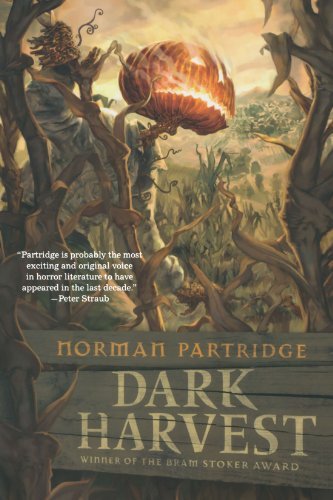
Dark Harvest
Book Description
Every October, a small Midwestern town faces a chilling tradition: the harvest of terror. As darkness descends, sinister forces awaken, and the streets tremble with the whispers of a malevolent entity, desperate for blood. Kids turn to legends of a gruesome fate that binds them to the unyielding night, where fear clashes with bravery in a fight for survival. Secrets unearth as alliances shatter under pressure. With the clock ticking and dread thickening the air, who will rise and face the malevolence that stalks their very souls? Will courage triumph, or will the harvest claim its victims once again?
Quick Book Summary
"Dark Harvest" by Norman Partridge is a tightly-woven horror novella set in a nameless Midwestern town under the chilling grip of a macabre Halloween ritual. Every October 31st, the town's teenage boys are locked up without food for days and then unleashed to hunt the October Boy, a supernatural scarecrow fueled by vengeance and pumpkin fire. Tradition promises that the one who kills the October Boy wins a way out of the town’s closed, oppressive world, but the cost of participating is steep—the truth behind the ritual threatens to unravel the town’s fragile order. The narrative shifts between terror, hope, and the urge for freedom, all while exploring the darkness inside both the hunted and the hunters. Ultimately, "Dark Harvest" is a coming-of-age tale veiled in horror, where loyalty, courage, and the search for meaning are tested by a nightmarish legacy.



Summary of Key Ideas
Table of Contents
Ritual and Tradition as Control
In a small, insular Midwestern town, Halloween is anything but festive. The community enforces a brutal ritual: each year, the teenage boys are imprisoned and starved for days, then released to hunt the October Boy, a supernatural figure borne of myth and nightmare. Promised escape from their stifling town should they succeed, the boys are driven by hunger, desperation, and youthful bravado. This twisted tradition keeps the town’s fears and secrets in check, ensuring conformity through terror and spectacle, while masking the deeper malevolence embedded at the heart of their customs.
Coming of Age Through Violence
The legend of the October Boy—a pumpkin-headed monster brought to life—serves as both terror and test. He is the embodiment of the town’s darkest fears, stalking the streets, fueled by the annual bloodlust. For the boys, the hunt is a rite of passage: to confront the October Boy is to confront death, courage, and the limits of their own innocence. The hunters become as monstrous as the hunted, blurring the line between boy and beast. Each year, alliances form and dissolve as the spectral clock ticks, betrayal and loyalty at a knife's edge.
Monsters: Literal and Metaphorical
Partridge weaves together the anxieties of adolescence and the corrosion brought by tradition. The town’s adults silently condone the cycle, trading youthful hope for resigned complicity. Secrets bubble beneath the surface, with some townsfolk aware of the ritual’s grisly origins and others using it for personal gain. The enforced savagery breeds resentment and questions—why obey a legacy so cruel? With every bloodsoaked Halloween, the lore shifts, but the sense of inescapable fate intensifies, ensuring the legacy will haunt the next generation.
Cycles of Fear and Desperation
As the night unfolds, the focus tightens on a handful of desperate characters—those who dare to challenge both the October Boy and the authority wielded by fear. Through harrowing confrontations, Partridge probes whether courage can break the cycle or if the town’s heritage of terror will consume even those who resist. The final revelations unearth the true horror of the town’s foundation and the possibility of change, however fraught or costly.
The Perils and Possibilities of Defiance
In the end, "Dark Harvest" offers a chilling fable about adolescence, rebellion, and the capacity for change. The novella blends a visceral, supernatural threat with the subtler horrors of oppression and conformity. By confronting their enemy—both literal and symbolic—the town’s youth reveal the price of escape and the enduring need for hope, even against the grim traditions claiming their souls.
Download This Summary
Get a free PDF of this summary instantly — no email required.