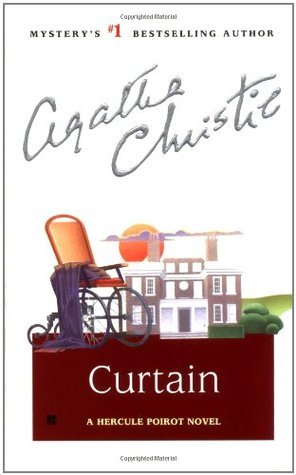
Curtain
Book Description
The final act is upon us, and the stakes have never been higher. In the shadow of an old curtain at Styles Court, a troubled yet determined Hercule Poirot faces his ultimate challenge: a cunning murderer lurking among friends. With time running out and deception at every turn, trust becomes a dangerous game, and the past refuses to stay buried. Each revelation tightens the knot of tension, while Poirot grapples with his dwindling strength and the chilling realization that the killer might be closer than he ever imagined. Will he solve the mystery before the final curtain falls?
Quick Book Summary
"Curtain" is the final Hercule Poirot novel by Agatha Christie, set in the familiar yet now somber surroundings of Styles Court, where Poirot first solved a mystery decades earlier. Now elderly, arthritic, and wheelchair-bound, Poirot returns with his old friend Captain Hastings to confront an elusive murderer whose crimes are almost undetectable. Poirot, plagued by declining health and an overwhelming sense of urgency, suspects that one of the house's guests is responsible for a string of indirect killings, manipulating others into murder with chilling skill. As Poirot races against time to expose the truth, strained loyalties, hidden motives, and haunting secrets surface. In a final, shocking twist, Poirot must confront the ultimate moral dilemma, considering whether justice can sometimes require the unthinkable.


Summary of Key Ideas
Table of Contents
The Nature of Indirect Guilt and Manipulation
After many years, Hercule Poirot invites his longtime companion, Captain Hastings, to Styles Court, now a guest house. Poirot, physically weakened and wheelchair-bound, reveals to Hastings that a shadowy murderer—someone present at Styles—is responsible for a series of deaths. Unusually, the killer never acts directly, but instead manipulates others into committing murder, leaving no direct evidence. Poirot, aware of his failing health, is haunted by the urgency of catching this mastermind before they strike again.
Aging, Mortality, and Legacy
Poirot’s pursuit at Styles is not merely a battle of wits, but also a poignant reflection on aging and mortality. Distraught by his physical decline, he is compelled to prove his enduring relevance as a detective. Simultaneously, Poirot grapples with the weight of legacy and the unresolved cases of his past. Each clue and conversation is tinged with the knowledge that this case will be his last, infusing the investigation with melancholy urgency and existential reflection.
The Ethics of Justice Versus the Law
Throughout their stay, tensions among the guests simmer. Poirot enlists Hastings as his eyes and ears, instructing him to observe the complex web of relationships. As Hastings attempts to unravel motives and secrets, he is troubled by his own personal entanglements—especially when his daughter is implicated. Poirot, meanwhile, withholds critical information from Hastings, struggling internally with the consequences of the solution he foresees.
Friendship and Loyalty under Strain
As the story unfolds, Christie probes the boundaries of law and morality. Poirot is forced to consider whether upholding justice might sometimes mean taking the law into personal hands. When the final crime is revealed, Poirot's actions provoke questions about righteousness, sacrifice, and the painful price of absolute justice. His ultimate decision is as controversial as it is heartbreaking, cementing both his legacy and moral complexity.
Deception and the Power of Observation
At the denouement, Poirot’s last case is resolved in an unexpected way—one that forever alters Hastings’s view of his friend. The atmospheric return to Styles, the psychological depth of the antagonist, and the unconventional solution make "Curtain" a powerful exploration of deception, mortality, and the ethics of detective work—marking a fitting and memorable end to the Poirot saga.
Download This Summary
Get a free PDF of this summary instantly — no email required.