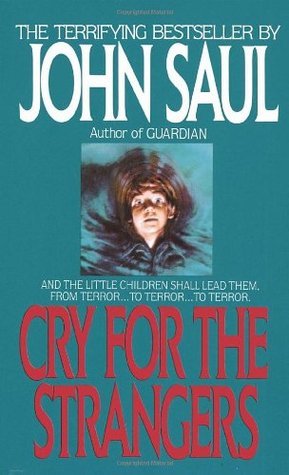
Cry for the Strangers
Book Description
A chilling presence lurks in the shadows of a small, quiet town, where strangers arrive under ominous circumstances, igniting fear and suspicion among neighbors. As a series of terrifying events unfold, a young girl discovers a dark secret linking the newcomers to the town's hidden past. With old loyalties tested and friendships shattered, the community must confront their deepest fears and face an evil that threatens to consume them all. Relationships fray and trust erodes while the clock ticks down to a night of reckoning. Who will survive when the truth comes crashing down?
Quick Book Summary
In "Cry for the Strangers," John Saul weaves a chilling tale set in the seemingly quiet town of Port Arbello. When a new psychiatrist, Dr. Brad Ward and his wife Elaine move to the coastal community, uncanny occurrences begin to haunt the area: children are found dead on the beach, die in bizarre accidents, or go missing entirely. Strange rituals and a history of unsolved deaths suggest a supernatural force, while the townsfolk grow increasingly paranoid. As a young girl, Missy, uncovers links between the new arrivals and the town’s buried secrets, loyalty and trust unravel. The community must face the darkness at their core, as an ancient evil threatens to consume them all, leading up to a suspenseful confrontation with devastating consequences.





Summary of Key Ideas
Table of Contents
The Hidden History and Repressed Trauma of a Town
The story unfolds in Port Arbello, a fog-shrouded town on the Pacific coast, where newcomers Dr. Brad Ward, a psychiatrist, and his wife Elaine arrive seeking a tranquil life. Their hope is soon shattered when they encounter the town’s haunted past — stories of unexplained child deaths on the beach and an unspoken pact of secrecy among long-time residents. The Wards' curiosity triggers suspicion among locals, and they sense an undercurrent of dread suffusing daily life. Saul immerses readers in a suspenseful atmosphere where every shadow hides a secret, and the town itself becomes a character shrouded in menace.
Supernatural Forces Versus Human Psychology
The mysterious deaths continue, stirring panic and igniting hysteria. Children, playful and innocent, are marked by an unexplainable terror, suggesting that something supernatural preys upon the most vulnerable. Missy, a young girl touched by recent tragedies, begins to have visions and nightmares that allude to paranormal dangers. Dr. Ward tries to offer rational explanations, but he is increasingly disturbed by evidence that eludes scientific understanding. The tension between rationality and the supernatural blurs reality, propelling the narrative's horror.
The Innocence and Vulnerability of Children
As paranoia spreads, old friendships unravel, and the town’s facade of unity fractures. Long-buried grievances surface, and suspicion swells against newcomers like the Wards. Relationships are tested when Missy’s claims are dismissed as hysteria by some, while others cling to folklore of vengeful spirits tied to Native legends and past injustices. The breakdown of trust is palpable, making it ever harder for the community to distinguish between genuine danger and their own fears. Saul masterfully portrays how collective trauma and secrecy can destabilize even the closest-knit groups.
The Breakdown of Community Trust and Relationships
Digging deeper, Missy and Dr. Ward confront the truth: the town’s foundation is tainted by unaddressed evil, and present horrors are rooted in past sins. Ritualistic occurrences and spectral visions lead them to uncover a legacy of violence, implicating respected townspeople in old crimes. Their investigation draws the wrath of those determined to keep the past hidden, placing Missy, the Wards, and other innocents at risk from both supernatural and human threats.
Unmasking Evil and the Fight for Survival
The climax erupts on a storm-lashed night when the boundary between the living and the spectral blurs. The townspeople must finally face their collective guilt and the literal manifestation of their fears. In a harrowing confrontation, old wounds are torn open and the community is forced to reckon with its darkness. The aftermath is bittersweet: while some evil is dispelled, the scars of trauma linger. Saul leaves readers pondering the nature of evil — is it supernatural, or born from secrets we choose not to face?
Download This Summary
Get a free PDF of this summary instantly — no email required.