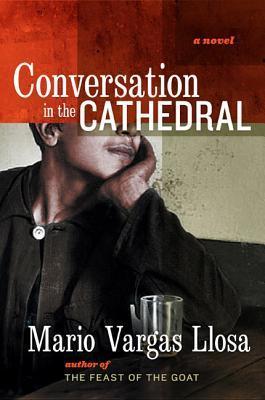
Conversation in the Cathedral
Book Description
Amidst the shadows of political oppression in 1950s Peru, a gripping dialogue unfolds between two former friends, revealing the tangled web of betrayal, passion, and moral dilemmas that shape their lives. As they navigate the bustling streets and the seedy underbelly of Lima, every revelation forces them to confront their choices and the corrupt society around them. Secrets simmer beneath the surface, igniting fierce conflicts that threaten to unravel everything they hold dear. In a world where loyalty is tested and power corrupts, can one man's quest for truth survive the suffocating grip of fear? What price will they pay for their convictions?
Quick Book Summary
"Conversation in the Cathedral" by Mario Vargas Llosa is a masterful exploration of life under dictatorship in 1950s Peru. Through the intertwining lives of Santiago Zavala, an embittered journalist from a privileged background, and Ambrosio, a former chauffeur, the novel delves into the fraught personal and political histories shaped by corruption and authoritarian power. Over the course of a rambling conversation in a run-down bar, memories surface and secrets are unveiled, revealing a society riddled with distrust, betrayal, and despair. As the two men recall events from the past, they confront the roles they played in systemic injustice, lost ideals, and fractured relationships. The story powerfully captures the suffocating atmosphere of an era where innocence is lost, morality is compromised, and hope seems elusive. Ultimately, the book is a meditation on guilt, responsibility, and the possibility of redemption in a broken world.




Summary of Key Ideas
Table of Contents
Political Oppression and Corruption
Set against the oppressive backdrop of 1950s Peru under the dictatorship of Manuel Odría, the novel presents a society roiled by corruption, fear, and pervasive control. This turbulent milieu is portrayed through the personal narratives of Santiago Zavala and Ambrosio, whose lives intersect despite their different social backgrounds. The dictatorship is not only an external force but also permeates the characters’ inner lives, manifesting as moral ambiguity and spiritual stagnation. The story’s setting reflects the mood of a generation grappling with lost opportunities and deep-seated frustration.
Memory and Personal Responsibility
Santiago's quest to find meaning forms the emotional core of the novel. Disillusioned by his family's complicity in the corrupt regime and his own privileged position, Santiago rebels by embracing ideals of justice, only to find those ideals compromised by the complexities of real life. His conversation with Ambrosio becomes a journey through painful memories, revealing the persistent influence of the past and the difficulty of forging an authentic identity amidst societal pressures. The search for truth is complicated by half-remembered events and the subjective nature of memory.
The Search for Identity and Truth
The novel’s structure, characterized by its flowing, overlapping dialogues, serves to unravel the intricate web of social relations and personal betrayals that bind the characters. Santiago and Ambrosio recall moments of moral compromise: failed romances, abandoned friends, and complicity in injustices, all of which speak to the broader theme of personal responsibility. The narrative exposes the ease with which ideals are set aside in the face of fear or desire for self-preservation, highlighting the price individuals pay for their choices.
Social Stratification and Alienation
Social divisions are starkly portrayed in the interactions between the characters. The novel moves between the elite drawing rooms and the shabby neighborhoods of Lima, underlining the chasm between those in power and those marginalized. Ambrosio’s perspective as a working-class man and Santiago’s as a member of the upper class offer contrasting yet intertwined experiences. Their shared disillusionment reflects a society in which everyone, regardless of status, is diminished by systemic corruption and the pervasive sense of alienation it breeds.
The Price of Compromise and Disillusionment
By the end of their conversation, both men are forced to confront the consequences of their actions and the bitterness of lost ideals. The cathedral’s seedy bar serves as a symbolic space for confession and reckoning, where truth emerges only to intensify their despair. The novel closes on a somber note, suggesting that while self-awareness is possible, escape from the cycles of compromise and disillusionment is rare. Llosa’s narrative thus stands as both a political indictment and a profound meditation on the burdens of memory and the elusive nature of redemption.
Download This Summary
Get a free PDF of this summary instantly — no email required.