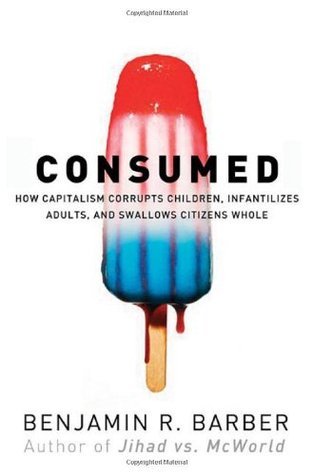
Consumed - How Markets Corrupt Children, Infantilize Adults & Swallow Citizens Whole
Book Description
Imagine a world where children are treated as mere commodities, adults are reduced to perpetual adolescents, and citizens are swallowed whole by a relentless market machine. In "Consumed," Benjamin R. Barber exposes the insidious ways consumer culture manipulates our lives, erodes our values, and commodifies our identities. With razor-sharp insight, he dismantles the myth of choice and reveals how marketing strategies infantilize society, leaving us craving more while forgetting what truly matters. This powerful manifesto challenges us to reclaim our agency and redefine our humanity: are we consumers, or can we become conscious citizens once more?
Quick Book Summary
"Consumed" by Benjamin R. Barber is a critical exploration of how modern consumer capitalism has warped individual identity and eroded the foundations of democratic citizenship. Barber examines how markets now prioritize selling wants over needs, targeting children and transforming adults into perpetual adolescents who are more easily manipulated. He explains the blurring lines between citizen, child, and consumer, showing how marketing techniques shape our desires and foster passivity and dependence, undermining our capacity for critical thought and genuine participation in society. Barber argues that consumer culture's focus on constant novelty and gratification leaves individuals disconnected and society vulnerable to manipulation. Ultimately, he challenges readers to question their roles as passive consumers and encourages reclaiming agency as active, engaged citizens.




Summary of Key Ideas
Table of Contents
Commodification of Childhood and Infantilization of Adults
Barber introduces the core thesis: that global capitalism, in its pursuit of ever-expanding markets, has increasingly targeted children as core consumers while also treating adults as perpetual adolescents. The lines distinguishing childhood, adulthood, and citizenship have blurred—a deliberate result of marketing strategies designed to maximize profit by fostering dependency, insecurity, and superficial desires. Barber shows how, by capitalizing on vulnerability, consumer culture commodifies youth itself and reduces maturity to a state of unending want.
Manipulation of Desire and Manufactured Needs
Central to Barber's argument is the concept of manufactured needs. Modern advertising no longer merely addresses existing desires, but actively creates new ones, blurring the distinction between what people truly need and what they are led to believe they need. As consumer culture encourages impulsivity and instant gratification, both children and adults are conditioned to seek novelty and pleasure rather than growth and fulfillment. This manipulation of desire ensures that people remain pliant consumers, easy to influence and difficult to satisfy.
Erosion of Citizenship and Public Engagement
Barber further explores the consequences for democratic life. As individuals become habituated to thinking of themselves primarily as consumers, their sense of public responsibility and engagement as citizens erodes. Consumer culture cultivates isolation, privatizing experience, and encouraging spectatorship over participation. Citizens lose the skills and motivation necessary for democratic deliberation and collective problem-solving, weakening the possibility for meaningful political action and civic life.
Myth of Choice and Loss of Agency
A recurring theme is the myth of choice. While consumer society celebrates individual freedom through the marketplace, Barber points out that these choices are often illusory, constrained and shaped by corporate interests who dictate what is available and desirable. The constant barrage of options leads not to empowerment but to confusion and distraction, masking the underlying loss of agency and the inability to shape one's own needs and values.
Resisting Consumer Culture and Reclaiming Democracy
In his conclusion, Barber offers a call to action. He suggests that resisting the corrosive effects of consumer culture requires both individual and collective effort. Reclaiming our identities as citizens—not just as consumers—depends on cultivating critical awareness, fostering meaningful public engagement, and supporting institutions that promote agency and autonomy. Only by reasserting control over our desires and destinies can we restore democracy and rediscover what truly matters.
Download This Summary
Get a free PDF of this summary instantly — no email required.