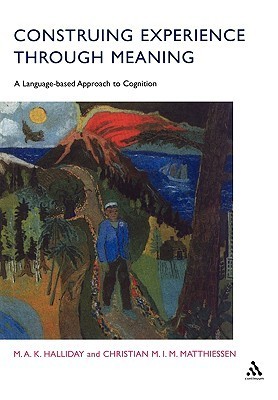
Construing Experience Through Meaning: A Language-Based Approach to Cognition (Open Linguistics
Book Description
Language isn’t just a tool; it’s the key to unlocking the very essence of human experience. In "Construing Experience Through Meaning," M.A.K. Halliday dives deep into the intricate dance between language and thought, revealing how our words shape our world. Each chapter unveils the powerful connections between communication and cognition, exploring how meaning is constructed and understood in every conversation. As fascinating examples bring these concepts to life, readers are left questioning the very nature of reality itself. What if the way we speak holds the magic to reshape our perceptions and connections?
Quick Book Summary
"Construing Experience Through Meaning" by M.A.K. Halliday offers a revolutionary linguistic perspective on how humans interpret and understand their experiences through language. Halliday challenges the traditional notion that language is merely a medium for expressing pre-formed thoughts, instead arguing that language is integral to the very process of thinking itself. Using the framework of Systemic Functional Linguistics, the book explores how all aspects of experience—physical, social, emotional—are constructed through the meanings that language makes possible. Rich examples dissect the daily acts of communication, demonstrating how meaning is contextually negotiated and how this process shapes cognition and perception. Ultimately, Halliday invites readers to reconsider the relationship between language, thought, and reality, suggesting that our linguistic choices actively shape our experiences and worldview.





Summary of Key Ideas
Table of Contents
Language as the Architecture of Experience
At the heart of Halliday’s theory lies the assertion that language is not just a passive vehicle for expressing ideas; it is the primary resource humans use to construe—actively create and organize—their experience of the world. The act of meaning-making is fundamental: by labeling, categorizing, and structuring reality through words and grammatical forms, individuals do cognitive work. Halliday uses numerous linguistic examples to argue that even basic perception is filtered and defined by the semiotic systems available to a speaker. Thus, different languages, with their unique structures, encourage speakers to notice and categorize the world in distinct ways.
Meaning Construction through Context
A key theme is the pervasive influence of context on meaning construction. Language operates within social contexts that determine what meanings are made possible, expected, or relevant. Halliday shows that context is inextricably linked to the kinds of grammatical choices speakers make—choices that reflect not only what is happening (the experiential function), but also how it is being represented and to whom (the interpersonal and textual functions). By analyzing how speakers modulate their language in various settings, the book demonstrates that cognition is a dynamic, context-sensitive process.
The Role of Grammar in Cognition
Halliday devotes significant attention to grammar, viewed not as a rigid set of rules but as a system of choices that enables a speaker to construe complex ideas. Grammar is seen as a toolkit for organizing experience: it offers patterns for sequencing events, expressing causes, attributing qualities, and signaling relationships. These grammatical resources, varying across languages, guide how speakers parse events and relationships in their minds, thus shaping cognitive patterns from early development through adulthood.
Negotiating Reality via Discourse
Discourse, or the broader flow of language in use, emerges as the domain where meaning is collectively constructed and negotiated. Through conversation and text, people build shared realities, resolve ambiguities, and create cohesion. Halliday illustrates how discourse patterns help manage information, signal boundaries between ideas, and foster mutual understanding. These negotiations are not neutral—they actively construct what is considered "real" or "true" within a culture, showing the societal power of language.
The book concludes by arguing that to understand cognition, we must start with meaning-making rather than abstract mental structures. Halliday posits that language is the primary cultural resource for mapping experience. The way individuals and communities construe the world is always mediated by linguistic resources, which are themselves embedded in histories of use. Consequently, altering language—whether by changing vocabulary, grammar, or discourse practices—has the power to reshape perception, social reality, and even thought itself.
Download This Summary
Get a free PDF of this summary instantly — no email required.