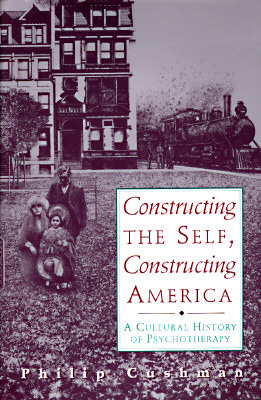
Constructing the Self, Constructing America: A Cultural History Of Psychotherapy
Book Description
Amidst the swirling chaos of modern America, a profound battle unfolds—the quest for identity, healing, and self-understanding. "Constructing the Self, Constructing America" dives into the intricate tapestry of psychotherapy, revealing how cultural shifts shape our inner lives and challenge the very core of who we are. Philip Cushman uncovers the powerful interplay between societal narratives and personal narratives, illuminating how the therapy room becomes a stage for both triumph and turmoil. As the foundation of the self is questioned and reconstructed, what truths emerge from the wreckage of our collective psyche?
Quick Book Summary
Philip Cushman’s "Constructing the Self, Constructing America" is a wide-ranging analysis of psychotherapy’s evolution in the United States, revealing how shifting cultural values and historical moments have continually remade understandings of the self and healing. Cushman demonstrates that psychotherapy is not a value-neutral practice but deeply intertwined with the social, economic, and moral currents of its time. From the emergence of the “empty self” in a consumer-driven society to the fragmented search for identity, the book shows that personal struggles often mirror cultural anxieties. By tracing the psychology profession’s development alongside America’s changing narrative around meaning, individuality, and community, Cushman argues that the very notion of selfhood is socially constructed and always in flux. This thought-provoking study challenges readers to reflect on how historical and cultural forces shape not just therapeutic practices but the inner lives of all Americans.


Summary of Key Ideas
Table of Contents
The Social Construction of the Self
Cushman opens with the assertion that the concept of the self is not a static or universal truth, but a product of its historical and social context. He explores how philosophical and religious currents in early American life influenced prevailing ideas about human nature, moral responsibility, and what it means to be an individual. As America’s economic and social structures shifted—through industrialization, urbanization, and the rise of consumer culture—so too did understandings of the self, setting the stage for the emergence of modern psychotherapy.
Psychotherapy as a Cultural Practice
Against this backdrop, Cushman claims that psychotherapy should not be viewed solely as a neutral, healing art. Rather, it is a participant in constructing normative values, ideals, and identities. The therapeutic encounter, he argues, reflects the tensions and hopes of American life: the quest for autonomy, the desire for meaning, and the struggle with alienation. Therapists themselves are shaped by the same cultural narratives as their patients, thus making psychotherapy a locus where broader cultural themes are enacted and interrogated.
The Rise of the "Empty Self"
A central theme in Cushman’s book is the emergence of what he calls the "empty self." In the context of twentieth-century American consumer society, he argues that people increasingly experience themselves as lacking, fragmented, and yearning for fulfillment through external means. As social bonds weaken and traditional sources of meaning wane, individuals turn to therapy to fill the void—often seeking personal solutions to what are fundamentally social or economic problems. This creates a paradox where therapy both alleviates suffering and, perhaps inadvertently, sustains the very conditions from which that suffering arises.
Therapy, Consumerism, and Individualism
Cushman critically examines how psychotherapy has evolved as both a reflection and driver of American individualism and consumerism. Techniques and diagnoses adapt to reinforce the cultural proclivity for self-improvement, autonomy, and consumption. The marketization of therapeutic services and the rise of self-help movements illustrate how the treatment of distress is commercialized, sometimes distancing the process from genuine communal healing or critical engagement with societal issues.
Questioning the Foundations of Healing
Ultimately, Cushman calls for a more reflexive and context-aware ethos in psychotherapy. By interrogating the assumptions underlying both theory and practice, therapists and patients alike can begin to understand how their struggles are rooted in historical forces beyond individual pathology. Cushman urges a reclamation of community, shared meaning, and critical dialogue as crucial elements for genuine healing and self-understanding, inviting readers to recognize the dynamic interplay between historical circumstances and personal psychology.
Download This Summary
Get a free PDF of this summary instantly — no email required.