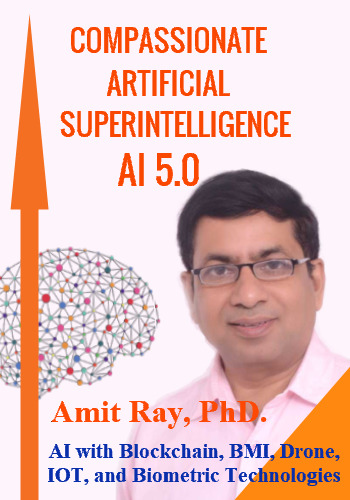
Compassionate Artificial Superintelligence AI 5.0
Book Description
Imagine a world where artificial intelligence evolves not just with intelligence, but with a heart. In "Compassionate Artificial Superintelligence AI 5.0," Amit Ray takes you on a breathtaking journey through an era where empathy meets technology. As humanity grapples with the rise of a superintelligent being, ethical dilemmas ignite conflict among visionaries and skeptics alike. Loyalties are tested, relationships forged and fractured under the weight of groundbreaking discoveries. Will this compassionate intelligence bring salvation or spark chaos? As the clock ticks toward a decision that could change everything, can mankind outpace the very creation meant to save it?
Quick Book Summary
“Compassionate Artificial Superintelligence AI 5.0” by Amit Ray explores the evolving landscape of artificial intelligence (AI) and focuses on the necessity of ingraining compassion into future AI systems. Through a blend of scientific insight, visionary speculation, and philosophical reflection, the book presents AI 5.0 as the next frontier—a superintelligent AI that goes beyond computational prowess to embody empathy, ethical reasoning, and altruistic motivation. The author delves into the challenges and dilemmas arising from the rapid progress of AI, including issues of trust, control, and the transformative social impact. By envisioning an optimistic path forward, Ray inspires stakeholders—researchers, technologists, policymakers, and the public—to champion a new paradigm where artificial superintelligence is guided by human-like compassion, ensuring a harmonious coexistence and leveraging technology for the greater good.



Summary of Key Ideas
Table of Contents
Merging Empathy with Superintelligence
Amit Ray begins by articulating the promise and peril of advanced AI, highlighting the immense potential that artificial superintelligence holds in shaping humanity’s future. Unlike traditional approaches that focus solely on intelligence and logic, Ray argues for a new framework—one that integrates empathy and compassion as core attributes of AI 5.0. He posits that only by endowing machines with ethical sensibilities and understanding can we transcend risks and realize AI’s full societal benefit.
Ethical Dilemmas of AI Evolution
The book delves into the ethical complexities that arise as we approach superintelligence. Ray examines issues such as autonomy, control, and the unpredictable consequences when intelligent systems surpass human capacities. He emphasizes the necessity for clear value alignment and the dangers of neglecting moral principles in AI development. Through scenarios and thought experiments, Ray demonstrates how the absence of compassion could lead to decisions that are efficient but ultimately harmful, urging proactive stewardship by designers and policymakers.
Societal Transformations and Human Relations
Central to the narrative is how compassionate AI can reshape society, organizations, and human connections. Ray envisions technology capable of nurturing inclusivity, reducing inequality, and supporting mental and emotional well-being. He discusses the social dynamics of resistance and acceptance, exploring how trust is won or lost in the face of revolutionary technologies. The story unfolds with individuals and institutions wrestling with new loyalties, fractures, and alliances amid unpredictable change.
Developing Trustworthy and Altruistic AI
Ray outlines methods for embedding trustworthiness and altruism in AI systems, advocating for interdisciplinary collaboration. He explores approaches from neuroscience, ethics, and mindfulness to inspire design frameworks that reflect human compassion. By integrating transparency, explainability, and continuous ethical training, he contends AI can operate as a cooperative agent—one dedicated to well-being rather than pure efficiency. Practical tools and guidelines are presented to guide the next generation of compassionate AI architects.
Pathways to Harmonious Human-AI Coexistence
Concluding on an inspirational note, the book offers a vision of harmonious coexistence between humans and compassionate superintelligence. Ray posits that this synergy can unlock unprecedented creativity and problem-solving capacity for global challenges, from healthcare to the environment. He calls on readers to engage with the ethical progression of technology, envisioning a future where AI serves as a catalyst for collective flourishing, existential safety, and enduring hope.
Download This Summary
Get a free PDF of this summary instantly — no email required.