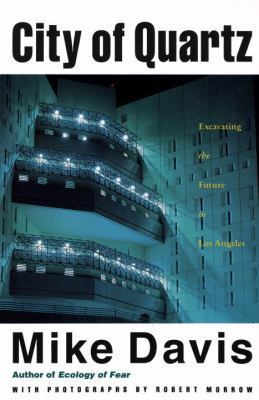
City of Quartz: Excavating the Future in Los Angeles
Book Description
Beneath the glimmering facade of Los Angeles lies a raw, chaotic world teeming with contradictions. Mike Davis plunges into the city’s depths, unveiling the stark realities of urban decay, environmental collapse, and social strife. From the sprawling slums to the gilded towers, the narrative unveils a city at the edge of chaos, where dreams clash violently with harsh truths. As the skyline rises, so do the stakes—housing, police brutality, ecological disaster. In this gripping exploration, the future of a city hangs in the balance. What will emerge from the ruins of aspiration and despair?
Quick Book Summary
"City of Quartz" by Mike Davis is a seminal examination of Los Angeles, peeling back its sun-drenched image to reveal the complex, often troubling realities beneath. Davis explores the city as a battleground for competing social, economic, and political forces, detailing how historical legacies and contemporary powers shape urban landscapes. He highlights deep divisions—between affluence and poverty, hope and marginalization, aspiration and environmental disaster. Through vivid reportage and historical analysis, Davis illustrates how ruthless development, segregation, and militarization have built a fragmented metropolis. The book ultimately positions Los Angeles as a case study for urban America's future, warning that patterns of exclusion and decline in LA mirror broader urban crises across the nation. Davis challenges readers to confront the city’s hidden histories and to imagine more just urban futures.


Summary of Key Ideas
Table of Contents
Rise of the Fortress City
Davis begins by exploring how Los Angeles has been mythologized as a city of limitless potential, masking a reality shaped by powerful elites and speculative development. The city’s glamor is contrasted with its origins: a landscape meticulously crafted through real estate booms, behind-the-scenes deals, and the orchestrated exclusion of marginalized groups. The powerful dreams projected onto LA serve as a smokescreen, concealing both historic and ongoing power struggles.
Divided Geographies and Social Segregation
The notion of the "fortress city" is central—Davis documents the proliferation of gated communities, security apparatuses, and architectural defenses designed to insulate the wealthy from the rest. He analyzes how fear of crime and social unrest has led to a militarization of urban space, with public life increasingly policed and privatized. This transformation not only hardens social divisions but also erodes traditional democratic engagement within the city.
The Politics of Urban Development
Economic forces and urban planning intensify LA’s fragmented geography. Davis describes how city growth, driven by speculative real estate interests and lax regulation, creates pockets of extreme wealth set against sprawling zones of poverty. Racial and class segregation are perpetuated through redlining, exclusionary zoning, and targeted policing, making social mobility increasingly difficult. The collapse of manufacturing and the rise of a service economy further destabilize working-class communities.
Environmental Crisis and Ecological Limits
Environmental decline looms large in Davis’s analysis. He details the exploitation and degradation of LA’s natural settings—rampant water use, pollution, and disregard for seismic threats. Davis contends that the city’s relentless expansion and disregard for ecological realities set it on a collision course with disaster. The city’s vulnerability to catastrophe is a direct result of political choices and economic interests that prioritize short-term gain over sustainable stewardship.
Myths, Dreams, and the Urban Imagination
Undergirding the city’s contradictions is its role as a canvas for dreams—both utopian and dystopian. Davis examines how LA’s image is consciously constructed by boosters, the entertainment industry, and real estate interests, even as the reality for many of its residents remains precarious. Ultimately, he presents Los Angeles as emblematic of wider urban challenges, arguing that without recognizing and reckoning with these hidden structures, cities risk perpetuating cycles of exclusion, strife, and environmental collapse.
Download This Summary
Get a free PDF of this summary instantly — no email required.