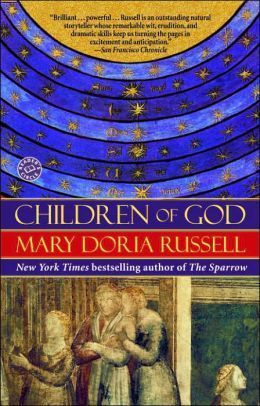
Children of God
Book Description
An alien world, a desperate mission, and the fate of humanity hang in the balance. In "Children of God," characters grapple with faith, love, and betrayal amidst the dizzying beauty of an uncharted planet. Tensions rise as cultural clashes ignite a struggle for understanding and survival, pushing relationships to the brink. The echoes of one’s past haunt them as they confront the profound questions of existence and choice. Friendships will be tested, and lives irrevocably altered, all while the universe holds its breath. Can they forge a future together, or will everything they hold dear slip away forever?
Quick Book Summary
"Children of God" by Mary Doria Russell continues the complex saga begun in "The Sparrow," following the aftermath of the disastrous first contact between humans and the alien inhabitants of the planet Rakhat. Father Emilio Sandoz, the sole survivor of the original Jesuit mission, struggles to recover from his emotional and physical trauma while reluctantly preparing to return to Rakhat. On Rakhat, a revolution simmers as native societies evolve in response to their prior interaction with Earth. The narrative deeply explores themes of faith, forgiveness, cultural collision, and resilience. As new characters join a second expedition, humans and Rakhat's natives confront the consequences of their intertwined destinies, seeking redemption, understanding, and the possibility of coexistence in a world scarred by love, betrayal, and loss.


Summary of Key Ideas
Table of Contents
Faith and Spiritual Recovery
The story resumes with Father Emilio Sandoz attempting to reconstruct his shattered faith and psyche after his harrowing experiences on Rakhat. Haunted by trauma and guilt, Sandoz’s spiritual journey is interwoven with his psychological healing. Russell delves into questions of theology, forgiveness, and the endurance of faith when tested by unimaginable suffering. Sandoz’s internal struggles mirror the continuing impact of the first human-alien contact, emphasizing the book’s introspective, philosophical core.
Cultural Consequences of Contact
As Rakhat’s native Jana’ata and Runa societies are irrevocably altered by human intervention, the fabric of their culture begins to unravel. The consequences of the first mission ripple outward, igniting rebellion, social upheaval, and a crisis of identity among alien communities. Human technologies and ideas have destabilized existing power structures, leading to unpredictable conflict between tradition and change. The narrative explores how cultural misunderstandings and interference create lasting change and existential dilemmas for both species.
Morality and Free Will
On Earth, the Vatican and scientific communities debate the morality of another mission to Rakhat. Driven by both religious duty and scientific curiosity, a new group—scientists, clergy, and refugees—embarks on a second, fraught journey. The intersecting motives of different factions betray deeper questions about free will, predestination, and moral responsibility. Characters must confront the ethics of intervention and the role of suffering in spiritual and social development.
Redemption and Forgiveness
The lives of the human and alien characters become inextricably entwined as they seek healing and resolution. Forgiveness—of oneself and others—becomes vital for moving forward. Personal bonds are remade, broken, or tested under the immense strain of trauma and change. Sacrifice is a persistent theme, as is the search for understanding across seemingly insurmountable divides. Through dialogue, loss, and love, the characters inch toward mutual redemption, guided by hope and faith.
Adaptation in the Face of Change
Russell’s speculative setting allows for a profound exploration of adaptation and transformation. The evolution of both human and alien societies is driven by necessity and circumstance, yet retains a deeply personal dimension shaped by individual choices. As Rakhat faces the dawn of a new era, "Children of God" considers the possibility—and cost—of forging a collective future from the remains of tragedy, ultimately charting the enduring capacity for empathy and change.
Download This Summary
Get a free PDF of this summary instantly — no email required.