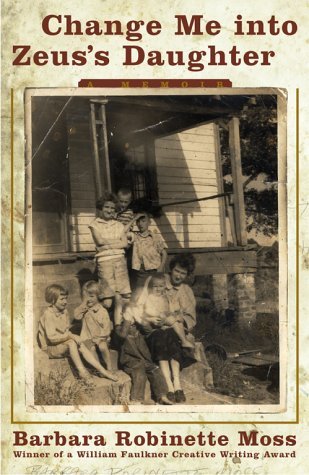
Change Me into Zeus's Daughter
Book Description
Desperate to escape her painful reality, a young girl makes an audacious prayer to the heavens, wishing for transformation into a goddess. As she navigates the treacherous waters of childhood fraught with dysfunction and yearning, each day becomes a battle between dreams and despair. Relationships fracture and mend like fragile glass, while the haunting shadows of her past threaten to redefine her future. With vivid prose and raw emotion, this coming-of-age tale reveals the struggle for identity and belonging amidst turmoil. When faced with the choices that could change everything, will she find the strength to reclaim her life?
Quick Book Summary
"Change Me into Zeus's Daughter" is Barbara Robinette Moss's poignant memoir of growing up in rural Alabama amidst crushing poverty, neglect, and family dysfunction. With an alcoholic father and a mother struggling to keep her many children fed, Moss faces daily hardships, including hunger, shame, and the visible disfigurement of her face from malnutrition. Despite these challenges, young Barbara's fierce imagination and resilience shine through. She longs to be transformed—praying to become as beautiful and powerful as Zeus's daughter from mythology. As she navigates complicated family dynamics, shame, and early adulthood's challenges, Moss slowly learns to harness the power of art and creativity. Her journey is not just about escape but about the gradual reclamation of her self-worth, identity, and hope.






Summary of Key Ideas
Table of Contents
Enduring Childhood Hardship and Poverty
Barbara Robinette Moss recounts a childhood marked by deprivation in rural Alabama. Her father’s alcoholism and abusive behavior create a tumultuous, unpredictable environment for Barbara and her many siblings. Poverty means constant hunger, inadequate clothing, and the humiliation of being different at school—compounded by Barbara’s physical disfigurement caused by malnutrition. Yet, the family’s Southern setting also provides a framework of cultural richness that contrasts with the hardscrabble reality, deepening the complexity of her experiences.
Resilience and the Power of Imagination
At the heart of Moss’s survival is her fierce imagination. Yearning to escape her circumstances, she dreams of mythical transformation, praying to be changed into Zeus’s daughter—someone strong, beautiful, and removed from pain. These fantasies are more than mere escapism; they are tools for endurance which allow Barbara to envision possibilities beyond her immediate reality. Her creative spirit later finds expression through art, carving out a space where she can redefine her worth.
Family Dynamics and the Cycle of Dysfunction
Family relationships in the memoir are intricate and unstable. The bond between Barbara, her mother, and siblings is fierce yet frequently tested by hardship and trauma. Her father’s rage and erratic behavior force the children to grow up quickly, forging a resilience that is both a blessing and a burden. Moments of tenderness and loyalty punctuate the difficulties, revealing how hope and love persist even in broken circumstances.
The Search for Beauty, Identity, and Self-Worth
Struggling with self-image due to her facial deformity, Barbara is haunted by feelings of shame, ugliness, and inadequacy. Her longing to be beautiful is intertwined with a deeper need for acceptance and belonging. As she matures, small triumphs—like corrective surgery and hints of academic recognition—bolster her confidence. Slowly, she confronts the internalized belief that she is unworthy, learning that transformation is not merely physical but also emotional and spiritual.
Transformation Through Art and Personal Agency
Moss’s journey culminates in her pursuit of art as sanctuary and salvation. Through drawing and painting, she finds the voice and identity denied to her as a child. Despite setbacks and lingering doubts, she gains the strength to forge her own path, breaking generational cycles of neglect. The memoir’s arc is one of painful honesty but also profound hope, as Barbara’s story attests to the relentless possibility of transformation and self-acceptance, even in the most adverse circumstances.
Download This Summary
Get a free PDF of this summary instantly — no email required.