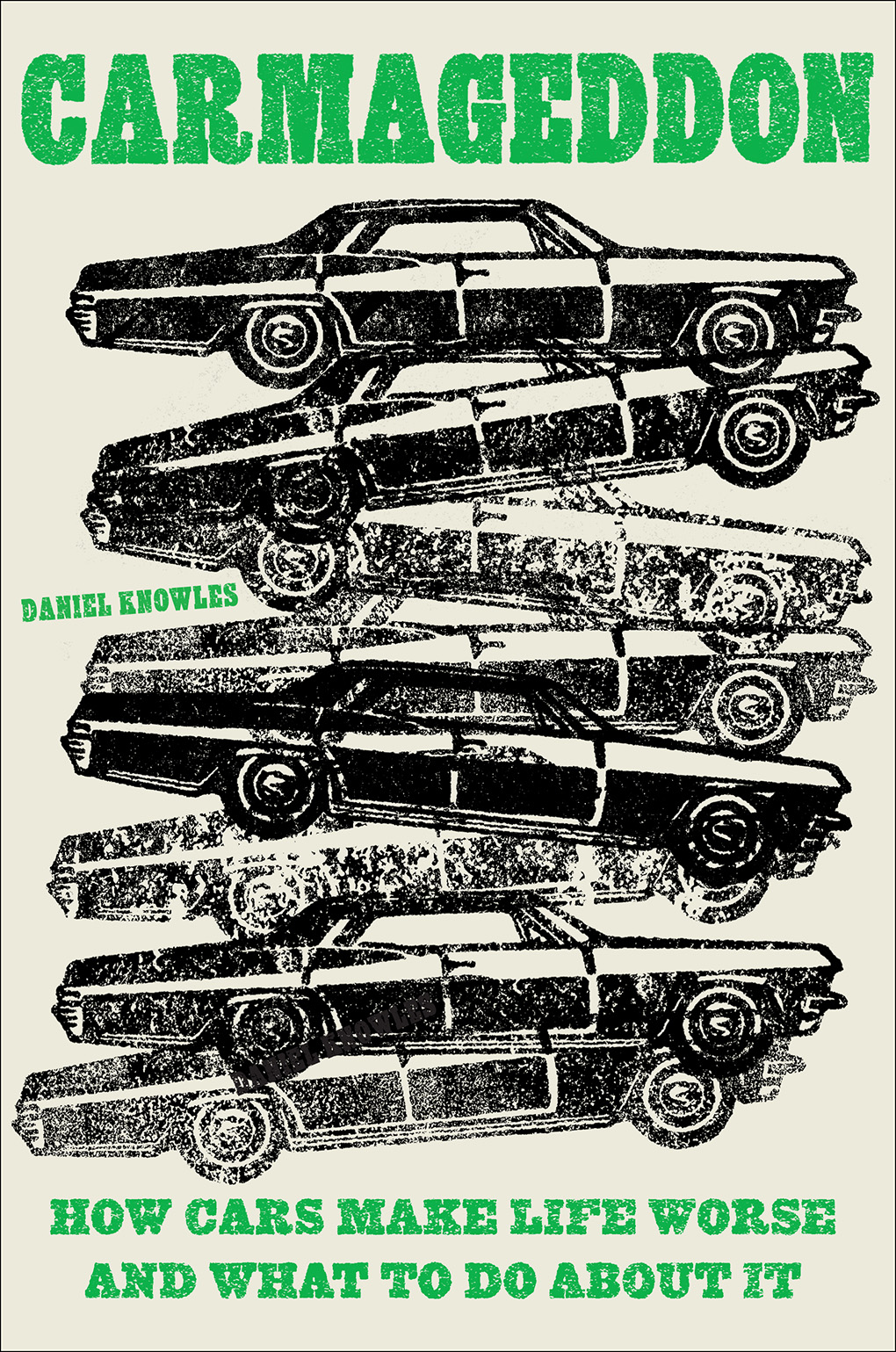
Carmageddon: How Cars Make Life Worse and What to Do About It
Book Description
Imagine a world choked by traffic, where freedom is shackled by metal beasts roaring down crumbling roads. 'Carmageddon: How Cars Make Life Worse and What to Do About It' unveils the stark reality of our car-centric society, exposing the hidden costs to our health, environment, and communities. With razor-sharp insights and compelling arguments, Daniel Knowles paints a vivid picture of a future liberated from the tyranny of the automobile. What if the key to reclaiming our cities and reconnecting with each other lies in daring to reimagine our relationship with transportation? Are we ready to shift gears towards a better tomorrow?
Quick Book Summary
In "Carmageddon: How Cars Make Life Worse and What to Do About It," Daniel Knowles delivers an incisive critique of the global car culture that has shaped cities, societies, and daily life. Through well-researched arguments and compelling examples, Knowles dissects the negative impacts of widespread car dependency—ranging from air pollution and climate change, to diminished public health, economic inefficiency, and the fragmentation of communities. He traces the historical roots of how cars came to dominate urban landscapes, critiques misguided policy decisions, and exposes the true costs that go far beyond congestion and frustration. Ultimately, Knowles presents practical, hopeful solutions to reimagine transportation, advocating for urban design that prioritizes people, sustainability, and vibrant communities over automobiles.



Summary of Key Ideas
Table of Contents
The Environmental and Health Costs of Car Dependency
Cars transformed society with promises of freedom and mobility, but Knowles argues that their widespread adoption came at a steep cost. The growth of car-centric infrastructure led to increased air and noise pollution, contributing to respiratory ailments and worsening climate change. Streets once filled with people became hazardous places dominated by fast-moving vehicles, making walking or cycling both risky and unpleasant. Public spaces faded, and vibrant neighborhoods gave way to sprawling, traffic-clogged suburbs.
How Cars Shaped Cities and Society
Knowles traces how cars redefined the very structure of cities. Urban planning shifted from dense, walkable neighborhoods to sprawling, car-dependent environments. Downtowns hollowed out as highways sliced through neighborhoods, and vast parking lots replaced homes and businesses. This shift alienated communities, isolated the elderly and non-drivers, and eroded social ties. The focus on accommodating automobiles led to cities that prioritize speed and convenience for a few over the wellbeing of entire populations.
Economic and Social Consequences of a Car-Centric World
Economically, car dominance incurs immense hidden costs. From maintaining expansive road networks to dealing with traffic accidents and lost productivity, the toll is vast. Car ownership imposes financial strain on individuals, while society as a whole pays through increased healthcare spending and environmental degradation. Inequality is exacerbated: those unable to afford cars are marginalized by urban designs that neglect public transit and non-motorized transport.
Policy Failures and the Role of Industry Influence
The persistence of this car-centric paradigm is underpinned by political and industrial forces. Automotive and fossil fuel industries wield substantial influence, shaping policy and public opinion to favor automobile use. Government policies have long subsidized road building and parking, further entrenching dependency. Knowles critiques regulatory failures and urges a critical reappraisal of policies that prioritize cars over people and the environment.
Strategies for Reclaiming Urban Spaces and Rethinking Transportation
Despite the entrenched position of cars in modern societies, Knowles outlines a range of hopeful solutions. He showcases global examples of cities that have rebalanced streets in favor of pedestrians, cyclists, and transit. Strategies include investing in high-quality public transportation, redesigning streetscapes, implementing congestion pricing, and reclaiming public spaces. Knowles contends that by reimagining urban transportation, cities can become healthier, more equitable, and more resilient places to live, ultimately charting a course toward a sustainable, car-light future.
Download This Summary
Get a free PDF of this summary instantly — no email required.