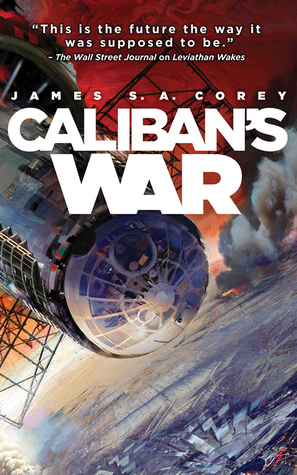
Caliban’s War
Book Description
In a solar system teetering on the brink of war, humanity's darkest secrets awaken. As monstrous creatures ravage planets and a conspiracy brews in the shadows, a disparate team of soldiers, scientists, and rebels unite against a common enemy. Tensions rise, alliances fracture, and the stakes escalate when the very fabric of civilization is threatened. Love blooms amid chaos, while loyalties are tested in the fires of desperation. As they fight to uncover the truth, do they even stand a chance against forces far beyond their control? What will it take to save everything they hold dear?
Quick Book Summary
"Caliban’s War," the second installment in James S.A. Corey's Expanse series, plunges readers into a solar system on the brink of chaos. On Ganymede, Earth's breadbasket in space, a mysterious, bioengineered super-soldier devastates military forces, sparking renewed tensions between Earth, Mars, and the Belt. As the threat escalates, a small group—Holden and his crew, Martian Marine Bobbie Draper, politician Chrisjen Avasarala, and scientist Praxidike Meng—join forces to investigate the monster's origins and the political conspiracy driving the crisis. With humanity’s survival at stake, personal loyalties are tested and fragile alliances formed. The novel deftly entwines pulse-pounding action, character-driven drama, and intricate world-building to explore humanity’s capacity for resilience, compassion, and unity in the face of existential threats.



Summary of Key Ideas
Table of Contents
Weapons of Mass Destruction and the Ethics of War
A sudden and terrifying attack by a monstrous creature on Ganymede, an agricultural hub of the outer planets, serves as the novel’s inciting incident. This event devastates relations between Earth and Mars, threatening open war as both blame each other for the catastrophe. The violence is the work of a bioengineered weapon linked to the alien protomolecule—an enigmatic and ancient force first introduced in the previous book. News of the attack throws the solar system into chaos, jeopardizing the fragile peace among the major powers and endangering the lives of millions dependent on Ganymede’s resources.
Conflicting Loyalties and Unlikely Alliances
Captain Holden and the crew of the Rocinante are drawn into the unfolding crisis when they embark on a rescue mission to Ganymede, helping Praxidike Meng, a desperate botanist, search for his missing daughter. Their quest quickly unearths disturbing connections between the missing children and the appearance of the protomolecule monster. With Prax’s expertise and the crew’s resourcefulness, they navigate both the chaos on the ground and the escalating military confrontations in orbit, gradually piecing together the disturbing breadth of the bio-weapon conspiracy.
Corruption, Power, and Political Intrigue
Martian Marine Bobbie Draper, the sole survivor of the initial attack, finds herself swept into high-level political intrigue on Earth. Traumatized and seeking the truth behind the monster’s origins, she becomes an ally to Chrisjen Avasarala, a sharp-witted UN official. Together, they navigate a minefield of bureaucracy, backdoor dealings, and overt corruption. Their efforts to avert war and expose the shadowy actors manipulating events underscore the series’ thematic focus on the dangers of unchecked power and the moral ambiguities of leadership under crisis.
Humanity on the Brink of Transformation
As hidden agendas and power plays come to light, Caliban’s War explores the formation of unlikely alliances. Individuals from vastly different backgrounds—Earther, Martian, Belter—are united by a shared resolve to save their world from destruction. Emotional threads such as Holden and Naomi’s deepening relationship and Prax’s paternal love provide personal stakes that humanize the epic conflict. The characters’ growth demonstrates how adversity can break down barriers and forge powerful bonds.
Hope, Adaptation, and Survival
In the final reckoning, the combined efforts of the main characters succeed not just in revealing the full magnitude of the protomolecule threat but also in averting a war that could doom humanity. Yet, the book concludes on a note of uncertainty: the alien protomolecule is still active, and its impact on human evolution—both literal and metaphorical—remains unresolved. This sets the stage for further exploration of adaptation, survival, and hope in subsequent volumes, suggesting that unity and resilience can carve possibility from the brink of annihilation.
Download This Summary
Get a free PDF of this summary instantly — no email required.