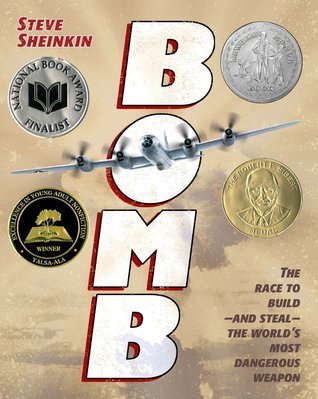
Bomb: The Race to Build—and Steal—the World's Most Dangerous Weapon
Book Description
A race against time to harness the most destructive force ever known. Scientists scramble in secret labs, unraveling the mysteries of the atom while spies lurk in shadows, desperate to steal the formula that could tip the scales of power. Tensions soar as nations teeter on the brink of annihilation. Loyalties are tested, alliances formed and shattered, and the fate of millions hangs in the balance. With the clock ticking and threats mounting, can anyone truly grasp the horrifying reality of what they're creating? In a world where knowledge is as deadly as a weapon, who will emerge victorious in the quest for the ultimate bomb?
Quick Book Summary
"Bomb: The Race to Build—and Steal—the World's Most Dangerous Weapon" by Steve Sheinkin weaves together the gripping stories of scientists, soldiers, and spies during World War II as they compete to develop the atomic bomb. The book follows three intersecting narratives: the secret efforts of American and British scientists in the Manhattan Project; the Soviet Union’s stealthy campaign to infiltrate and steal nuclear secrets; and the sabotage operations by Norwegians and others to cripple Nazi Germany’s parallel atomic ambitions. Sheinkin explores the moral dilemmas faced by those involved, the high-stakes espionage, and the immense scientific breakthroughs that ultimately led to the creation—and use—of the bomb. Told with edge-of-your-seat pacing, Sheinkin reveals how the invention of the atomic bomb changed the world forever, raising profound questions about science, power, and responsibility.





Summary of Key Ideas
Table of Contents
- 1. The race between nations to develop the atomic bomb
- 2. Espionage and the role of spies in stealing nuclear secrets
- 3. Scientific innovation and the challenges of building the bomb
- 4. Moral dilemmas faced by scientists and leaders
- 5. Impacts of the atomic bomb on the outcome of World War II and on humanity
The race between nations to develop the atomic bomb
At the heart of Sheinkin’s narrative is the frantic competition among the United States, Germany, and the Soviet Union to develop or acquire the atomic bomb during World War II. The Allies, fearing Nazi advances in nuclear physics, assemble a top-secret group of brilliant minds in Los Alamos, New Mexico. The scientists, including renowned physicist Robert Oppenheimer, are tasked with solving unprecedented technical problems as they race against the clock to harness nuclear fission, transform theory into reality, and beat the Germans to the bomb.
Espionage and the role of spies in stealing nuclear secrets
As the Manhattan Project unfolds, the USSR dispatches a covert network of spies to infiltrate American scientific efforts. Led by such figures as Klaus Fuchs and Harry Gold, Soviet operatives use coded messages and dead drops to collect critical information. Their actions threaten to tip the fragile balance of global power, intensifying tensions and suspicions among the Allies. Meanwhile, within Nazi-occupied Europe, resistance fighters conduct daring sabotage missions to disrupt Germany’s efforts to produce heavy water, a key material needed for an atomic weapon.
Scientific innovation and the challenges of building the bomb
Throughout these parallel quests, the book emphasizes the scientific breakthroughs and the extraordinary teamwork required to devise new materials, address safety risks, and design the bomb’s complex inner workings. Challenges are both technical and human: security lapses, conflicting egos, and the immense psychological stress of understanding the destructive result of their labor. Sheinkin humanizes the scientists by delving into their personal lives and the ethical dilemmas they wrestle with, knowing the weapon they’re building can end millions of lives.
Moral dilemmas faced by scientists and leaders
The climax comes with the successful test of the first atomic bomb in July 1945, quickly followed by its deployment over Hiroshima and Nagasaki. These events highlight the sobering power unleashed by modern science. Sheinkin details reactions across the world—including horror, relief, and dread—as well as the immediate effect on bringing World War II to a close, and inaugurating the nuclear age. The Soviet Union, equipped with stolen secrets, soon develops its own bomb, setting the stage for a dangerous arms race.
Impacts of the atomic bomb on the outcome of World War II and on humanity
In the aftermath, the book grapples with the broader consequences of the atomic bomb. The achievements of science are shadowed by ethical questions and long-term anxiety about nuclear proliferation. Sheinkin ends by underscoring the lasting legacy of these events, raising crucial questions about responsibility, secrecy, and the limits of scientific endeavor. The transformation of warfare, geopolitics, and the moral fabric of society is left as a thought-provoking challenge for future generations.
Download This Summary
Get a free PDF of this summary instantly — no email required.