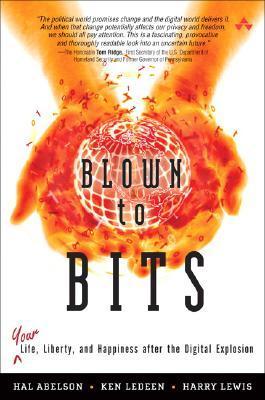
Blown to Bits: Your Life, Liberty, and Happiness After the Digital Explosion
Book Description
Imagine a world where your every move is tracked, your thoughts are analyzed, and your privacy is a relic of the past. "Blown to Bits" dives into the heart of the digital explosion, exposing the unseen forces that shape your life, liberty, and pursuit of happiness. With thrilling insights and stark clarity, it unravels the tangled web of technology, privacy, and the consequences that ripple through society. As the boundaries of freedom blur, can humanity reclaim what it has lost, or are we destined to be mere data points in a vast algorithm?
Quick Book Summary
"Blown to Bits: Your Life, Liberty, and Happiness After the Digital Explosion" by Hal Abelson takes readers on an eye-opening journey through the hidden mechanisms that govern the digital world. The book reveals how everyday activities—communications, browsing, shopping—generate vast amounts of personal data, often collected without our knowledge or explicit consent. It systematically examines the consequences of ubiquitous connectivity, challenging the balance between technological advancement and individual rights. Abelson highlights pressing issues like privacy erosion, information permanence, and the complexities of digital security. Ultimately, the book urges society to confront and navigate these technological dilemmas, emphasizing the importance of understanding digital forces to preserve liberty and personal happiness in our increasingly data-driven future.


Summary of Key Ideas
Table of Contents
The Explosion of Digital Information
The digital revolution has transformed every facet of modern life, bringing with it an unprecedented explosion of information. From emails and social media to surveillance cameras and sensors, data flows endlessly, creating a permanent, searchable record of our activities—often far beyond what we realize. This explosion is not simply a technological phenomenon but a societal shift, reshaping how we communicate, work, and interact. While offering vast new opportunities for connection and innovation, it also poses complex questions about who controls this data, how it’s used, and the unintended consequences that result from its abundance.
Erosion of Privacy in a Connected World
As more aspects of life move online, the notion of privacy has rapidly changed. The boundaries between public and private have blurred; what once required effort to uncover about someone is now available at the click of a button. Personal details, habits, and even relationships can be inferred or reconstructed from scattered digital traces. The book details how companies, governments, and malicious actors leverage this explosion of information—sometimes for benevolent purposes, but also in ways that erode personal autonomy and security. The permanence of digital information means forgetting has become nearly impossible, with potentially life-altering consequences for individuals.
Challenges to Freedom and Liberty
With privacy under constant threat, traditional liberties face new challenges. Surveillance, algorithmic decision-making, and digital profiling can target specific groups, suppress dissent, or reinforce biases, all without the transparency of due process. Abelson’s analysis underscores the dangers posed by unaccountable technological power, whether from state actors or commercial entities. The book discusses real-world examples where digital tools enabled both empowerment and oppression. The challenge is to safeguard freedom in an age where laws, ethics, and technology may often be misaligned.
Transparency, Accountability, and Digital Ethics
Navigating these complexities requires more than just technical fixes; it demands increased transparency and ethical accountability from those wielding digital power. Abelson argues that understanding the mathematics and logic underpinning digital systems is crucial for informed debate and policy-making. He stresses the importance of digital literacy so citizens can recognize when their rights are at stake. The book urges for robust oversight frameworks and participatory governance to ensure accountability for those shaping the digital information landscape.
Empowering Citizens and the Path Forward
Ultimately, "Blown to Bits" calls on individuals and societies to engage proactively with the realities of the digital world. By demystifying how data is created, tracked, and used, Abelson empowers readers to demand fairness, autonomy, and control over their digital identities. The book concludes by envisioning a future where informed citizens assert their rights, shape technology’s direction, and reclaim freedoms in an ever-connected world. The path forward involves not rejecting technology, but actively shaping its role in support of life, liberty, and human happiness.
Download This Summary
Get a free PDF of this summary instantly — no email required.