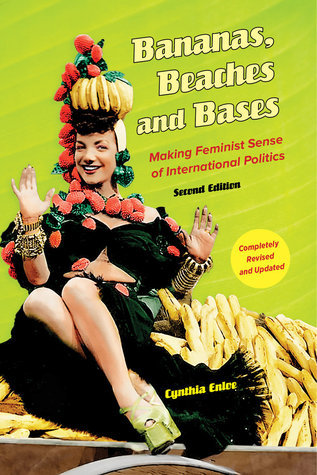
Bananas, Beaches and Bases: Making Feminist Sense of International Politics
Book Description
What do bananas, beaches, and military bases have in common? They reveal the hidden threads of power, gender, and global politics. Cynthia Enloe uncovers the shocking role women play in international relations, challenging traditional narratives and exposing the everyday realities of war and peace. This provocative exploration peels back layers of political discourse, highlighting how gender shapes everything from military strategies to economic policies. With sharp insights and compelling examples, we’re drawn into a world where ordinary lives intersect with global dynamics. What happens when we refuse to overlook the feminine in the international arena?
Quick Book Summary
Cynthia Enloe’s "Bananas, Beaches and Bases" is a groundbreaking feminist analysis of international politics, exposing how gender shapes global power dynamics. Through the seemingly mundane—such as banana plantations, tourist beaches, and military bases—Enloe illustrates how women’s labor, bodies, and experiences are crucial yet often invisible in traditional political narratives. Moving beyond state-centric viewpoints, she shows how wives of diplomats, domestic workers, sex workers, and factory employees significantly influence international relations. Enloe’s work challenges readers to question who is left out of foreign policy conversations, revealing how masculine assumptions in politics mask critical truths and perpetuate inequalities. By foregrounding women’s diverse experiences, Enloe calls for a more inclusive, just, and accurate understanding of global affairs.




Summary of Key Ideas
Table of Contents
How Gender Shapes Global Politics
Enloe first reshapes our view of international relations by highlighting the gendered dimensions of global politics. She argues that mainstream political analysis often ignores or downplays how gender—particularly women’s experiences—shapes diplomatic and economic decisions. By centering women’s stories, Enloe reveals that what may seem like private, seemingly apolitical spaces are actually connected to the broader workings of power and policy, influencing everything from trade agreements to wartime strategies.
Hidden Labor and Women’s Roles
The book delves into the ways women’s labor remains ubiquitous yet undervalued in the global system. From female workers on banana plantations and in garment factories to domestic servants for diplomats and service staff at military bases, women facilitate the everyday functioning of international corporations, governments, and armies. Enloe analyzes how these roles—though crucial—are often invisible, with women’s contributions obscured by both economic and cultural hierarchies.
Tourism, Militarism, and Economic Exploitation
Enloe uses vivid case studies to show how tourism, militarism, and economic exploitation intersect with gender. Tourist economies rely heavily on female workers and commodify their bodies, while military bases create social and economic structures that exploit local women, often through sex work. These examples demonstrate how women’s lives are shaped by—and help sustain—the global infrastructure of leisure, security, and profit, even as their agency is frequently undermined or exploited.
The Limits of Traditional International Relations Theory
Traditional international relations theory is critiqued for its narrow, masculine focus. Enloe unmasks the ways in which established theories and state-centric models exclude women’s voices and experiences. She argues that understanding power and conflict purely through the lens of state actors leads to incomplete, distorted perspectives. Instead, Enloe stresses the necessity of incorporating feminist analysis to reveal the full impact of global processes on different populations.
Feminist Approaches to Reimagining Power
Ultimately, Enloe calls for a feminist reimagining of international politics. She advocates for the inclusion of diverse women’s voices and urges readers to interrogate who gets to shape policy and whose interests are served. By challenging traditional narratives and uncovering hidden power dynamics, Enloe’s book pushes us toward a more equitable and accurate understanding of the complexities of the international order.
Download This Summary
Get a free PDF of this summary instantly — no email required.