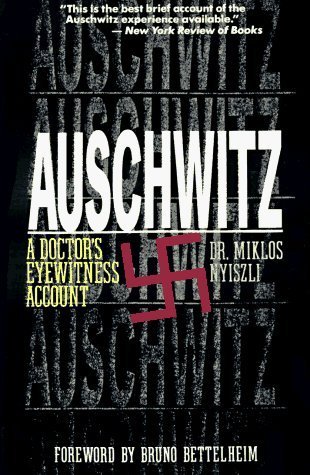
Auschwitz: A Doctor's Eyewitness Account
Book Description
Amidst the horrors of Auschwitz, a lone doctor navigates the thin line between survival and complicity. Witnessing unimaginable atrocities, he wrestles with his duty to heal against the backdrop of a mechanized system of death. Every decision becomes a desperate gamble for life, as he grapples with the moral abyss around him. This harrowing firsthand account plunges into the terrifying depths of human resilience and depravity, questioning the very essence of humanity. How can one man balance the instinct to survive with the haunting echoes of his conscience?
Quick Book Summary
"Auschwitz: A Doctor’s Eyewitness Account" by Miklós Nyiszli is a harrowing memoir that recounts the author's experience as a Hungarian Jewish physician imprisoned in Auschwitz during World War II. Forced to serve as a pathologist under the infamous Dr. Josef Mengele, Nyiszli offers a rare, firsthand look into the inner workings of the Nazi death camp. Grappling daily with the ethical torment of his role, he describes the struggle to maintain humanity amid relentless brutality. Nyiszli’s detailed observations expose the mechanized methods of mass murder, the suffering of victims, and the heartbreaking decisions made in the name of survival. His account is both a testimony to unimaginable horror and a powerful examination of moral resilience and complicity under extreme conditions.




Summary of Key Ideas
Table of Contents
Survival and Moral Compromise
Miklós Nyiszli’s memoir plunges readers into the grisly realm of Auschwitz, where he is selected for forced labor as a physician in the Sonderkommando. His medical training condemns him to autopsy work under SS command, while affording him certain privileges and a slightly improved chance of survival. Nyiszli grapples with the terrifying dilemma of participating in the camp’s machinery of death in order to stay alive and possibly save others. Every day presents new ethical quandaries, as he is confronted by unimaginable suffering, loss, and the persistent threat of annihilation.
The Inner Workings of the Death Camp
Through Nyiszli’s eyes, the day-to-day reality of Auschwitz unfolds in harrowing detail. He meticulously documents the operational structure of the extermination process—from the deceptive arrival procedures to the inner workings of the gas chambers and crematoria. His proximity to Dr. Josef Mengele, notorious for his sadistic medical experiments, forces Nyiszli to witness both pseudo-scientific atrocities and the systemic, industrialized murder of innocents. The memoir reveals the perverse logic of Nazi bureaucracy and the banality of evil, rendered even more horrifying by its clinical efficiency.
The Role of Medicine and Science in Atrocity
Despite being trapped in a moral nightmare, Nyiszli clings to fragments of humanity. He befriends fellow prisoners, offers discreet medical aid when possible, and records the suffering and small acts of resistance he observes. The boundaries between survival and complicity are blurred, and every decision carries immense personal and ethical consequences. His frank acknowledgment of his struggles with guilt and helplessness makes his narrative an unflinching examination of human frailty and the price of survival under totalitarian cruelty.
Coping with Trauma and Witnessing Evil
The psychological toll exacted on Nyiszli and those around him is profound. He details the coping mechanisms prisoners develop to endure chaos, grief, and fear, whether through camaraderie or emotional detachment. The constant exposure to death, violence, and degradation leaves indelible scars, illustrated in Nyiszli’s haunted reflections. He underscores the power of witness and testimony, believing that documenting these events is crucial for future generations and for the dignity of those who perished.
The Limits of Human Compassion and Resistance
Ultimately, Nyiszli’s account is an indictment of not only the regime that orchestrated Auschwitz, but of the depths—and resilience—of the human spirit. His testimony asks searching questions about the limits of empathy, the meaning of resistance, and the capacity for hope in the shadow of genocide. The memoir forces readers to confront the realities of complicity, the boundaries of morality, and the necessity of remembering. Nyiszli’s story stands as a crucial witness to history and an urgent meditation on survival, trauma, and the ethical abyss of the Holocaust.
Download This Summary
Get a free PDF of this summary instantly — no email required.