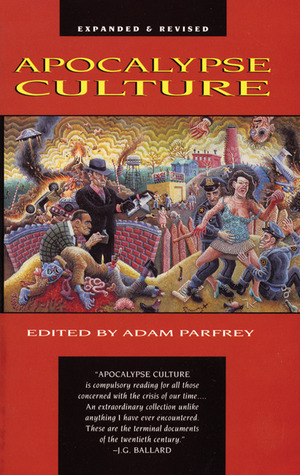
Apocalypse Culture
Book Description
Dive into a world where the dark underbelly of society collides with the bizarre and the macabre in "Apocalypse Culture" by Adam Parfrey. This gripping exploration unearths the shocking truths lurking behind cultural phenomena, from fringe beliefs to the obsessions of lost souls. With each turn of the page, the boundaries blur between reality and the surreal, casting light on our collective anxieties and the human fascination with destruction. As the fabric of civilization unravels, what does it reveal about our deepest fears and desires? Are we drawn to chaos, or is chaos drawn to us?
Quick Book Summary
"Apocalypse Culture" by Adam Parfrey is a provocative anthology that delves into society's most taboo, extreme, and unsettling subcultures. Through a tapestry of essays, interviews, and manifestos, the book exposes the underbelly of the human psyche, examining everything from conspiracy theories and fringe philosophies to social decadence and moral collapse. Parfrey curates a shocking, informative, and sometimes disturbing look at the dark impulses shaping modern civilization. The book reveals how fascination with chaos, destruction, and deviance reflects our collective anxieties, challenging readers to question the boundaries of normalcy and the nature of truth. Ultimately, "Apocalypse Culture" forces a reckoning with the shadow side of progress, exploring why humanity is drawn to both self-destruction and the mysteries beyond the conventional.

Summary of Key Ideas
Table of Contents
Fascination with Catastrophe and Decadence
"Apocalypse Culture" introduces readers to a kaleidoscope of unsettling, unconventional ideas and people. The book is not a single-author narrative but an anthology curated by Adam Parfrey, featuring voices from the extremities of societal experience. From the very first pages, the material confronts our deepest anxieties about civilization’s collapse and human depravity. Parfrey compiles documentary evidence, personal accounts, and speculative essays that drag the hidden aspects of society into the sunlight, challenging readers to confront what lurks beneath the veneer of order.
Exploration of Fringe Beliefs and Subcultures
Central to the anthology is the idea that many are drawn toward catastrophe and chaos. Whether examining cults obsessed with apocalypse, individuals fixated on societal breakdown, or political movements thriving on fear, the book reveals a recurring human fascination with endings. These obsessions are depicted not as anomalies, but as recurring threads throughout history, suggesting that destruction and decadence are ever-present undercurrents, intimately bound with the human experience of modernity. The book suggests that our media, beliefs, and art forms reflect a latent desire to witness or even participate in collapse.
Deconstructing Taboo and Societal Norms
Fringe beliefs and subcultures populate the pages, illustrating how society is shaped as much by its margins as its mainstream. Parfrey’s collection includes explorations of occult societies, radical political ideologies, underground publishers, and criminal outliers. These perspectives, while shocking, serve to expose the limits of societal consensus. By documenting fringe experiences, "Apocalypse Culture" dissolves the illusion of universal norms and demonstrates the complexity—and sometimes the volatility—of pluralistic societies.
The Appeal of Conspiracy and Alternative Truths
Taboo subjects and broken boundaries play a major role throughout the book. Sex, death, violence, and mental illness are dissected without censorship, forcing a reconsideration of how society defines the acceptable and the profane. By putting the unspeakable on public display, the book interrogates who gets to draw the lines of morality and legality. The effect is not simply to shock, but to provoke dialogue about freedom, repression, and the construction of cultural values. In doing so, the book challenges the reader to reconsider the very foundation of collective agreement.
Reflections on Humanity’s Darkest Impulses
The allure of conspiracy theories and alternative realities emerges as a unifying theme among the diverse selections. Parfrey’s anthology highlights how, especially in times of uncertainty, individuals and groups form communities around secret knowledge, hidden threats, and forbidden truths. In exploring these subcultures, "Apocalypse Culture" reveals how suspicion, paranoia, and the hunger for certainty can become powerful social forces. The book ultimately stands as both a chronicle and a critique of humanity’s ongoing romance with destruction, deviance, and revelation.
Download This Summary
Get a free PDF of this summary instantly — no email required.