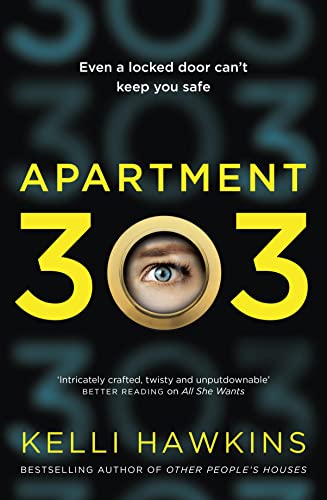
Apartment 303
Book Description
What secrets lurk behind the door of Apartment 303? When a reclusive artist discovers a shocking truth about her neighbor, her isolated world shatters, plunging her into a web of deception and hidden agendas. As tensions rise within the close-knit community, alliances form and crumble, forcing her to confront her past and the lengths she’ll go to protect those she loves. With time running out, trust becomes a dangerous game. Every choice leads her deeper into a maze of lies—who can she really believe? In a place where shadows hold power, will she emerge unscathed, or become another victim of the darkness?
Quick Book Summary
In "Apartment 303" by Kelli Hawkins, a reclusive artist named Hannah lives a quiet, solitary life, finding solace in her creative routines and avoiding close interactions with neighbors in her apartment complex. But when she stumbles upon disturbing evidence suggesting her neighbor may be involved in a crime, her meticulously ordered world is thrown into chaos. Drawn inexorably into a web of secrets and deceit, Hannah is forced to question the motives of those around her and confront buried traumas of her own. As paranoia grows and trust fractures within the building’s tight-knit community, Hannah navigates a dangerous path between uncovering the truth and protecting those she cares about. In a race against time and with her vulnerability mounting, she must decide who to trust before darkness claims another victim, including possibly herself.





Summary of Key Ideas
Table of Contents
Isolation and Vulnerability
Hannah is an artist whose life revolves around her secluded apartment, her art acting as both sanctuary and shield from the world outside. Her days pass in predictable solitude within Apartment 303, but the arrival of new neighbors and subtle disturbances in the building disturb her sense of peace. Her hypersensitivity to routine makes these small changes feel momentous, and her growing curiosity pushes her to observe her neighbors more closely, inadvertently drawing her deeper into the building’s private dramas.
The Unraveling of Secrets
One night, Hannah hears alarming noises from the neighboring apartment and, compelled by a mix of fear and concern, witnesses evidence suggesting foul play. Despite her instinct to stay uninvolved, guilt and mounting suspicion force her to delve deeper. Through furtive observations and awkward interactions with neighbors, she uncovers a series of interconnected secrets threading through the building, revealing that the people she thought she barely knew are far more connected—and dangerous—than she realized.
Trust and Deceit in Close-Knit Communities
Hannah’s efforts to expose the truth are met with resistance from both her own apprehensions and the building’s resistance to outsiders probing too closely. Loyalties shift and alliances form among residents as suspicions circulate. The boundaries between friend and foe blur, leaving Hannah uncertain whom she can trust. This mounting paranoia compels her to confront past traumas that shaped her isolation—realizing that her refuge may have become her prison.
Confronting the Past to Protect the Present
As the situation escalates within Apartment 303, Hannah’s struggle becomes as much about self-preservation as about justice. The stakes rise when her own safety—and that of the few she allows close—are directly threatened. She must determine how far she is willing to go to protect herself and others, even if it means exposing her vulnerabilities and risking everything. Every choice Hannah makes draws her further into a dark labyrinth of deceit, ultimately forcing her to make a definitive stand against the darkness looming over the community.
The Cost of Truth
In the tense climax, Hannah’s dogged pursuit of the truth unveils the real culprit and their motives, but not without cost. The secrets she uncovers irreversibly alter the relationships and dynamics within the apartment complex. The novel closes with Hannah changed: she’s made peace with elements of her troubled past, accepting that facing danger is sometimes the only path to protect what matters. "Apartment 303" leaves readers questioning the nature of community, trust, and the price of uncovering the truth when the shadows are closer than imagined.
Download This Summary
Get a free PDF of this summary instantly — no email required.