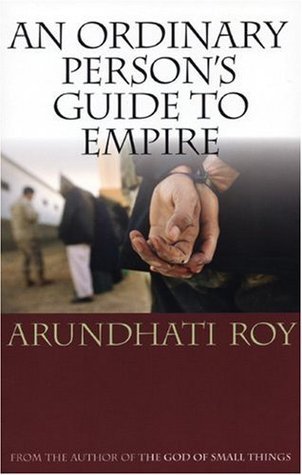
An Ordinary Person's Guide to Empire
Book Description
A world built on invisible chains is laid bare in "An Ordinary Person's Guide to Empire." Arundhati Roy masterfully unravels the threads of power, exploitation, and resistance, exposing the stark realities behind the glimmer of progress. With piercing clarity, she navigates through the lives of those often forgotten, challenging the myths that sustain dominance. Each page reverberates with stories that ignite passion and provoke thought, revealing the hidden costs of empire. As the echoes of history collide with the present, one question lingers: What will it take for the ordinary to rise against the extraordinary forces that bind them?
Quick Book Summary
"An Ordinary Person's Guide to Empire" is a powerful collection of essays by Arundhati Roy that exposes the underlying mechanisms of modern imperialism and its repercussions on societies, particularly in India. Roy weaves together reportage, analysis, and personal reflection to illuminate how invisible systems of control—political, economic, and military—shape global and local realities. She challenges commonly accepted narratives about progress, democracy, and development, unmasking the suffering and resistance of marginalized communities. Roy urges readers to recognize the deep entanglement of ordinary lives with structures of global power and advocates for a renewed sense of responsibility, solidarity, and defiance. The book serves both as a sharp critique and a rallying call for individuals to confront and resist the everyday workings of empire.




Summary of Key Ideas
Table of Contents
The Invisible Mechanisms of Empire
Arundhati Roy begins by dissecting the subtle mechanisms that sustain modern empires, moving beyond traditional colonial structures to expose less visible forms of control. She highlights how economic policies, international institutions, and military interventions are often masked as development or counter-terrorism, perpetuating inequality and subjugation. The book draws a direct line from overt colonialism to the pervasive influence of corporations and neoliberal agendas, revealing how power adapts and reasserts itself in new guises.
Challenging Narratives of Progress
Throughout her essays, Roy confronts the dominant narratives that justify imperial actions. She interrogates the language of democracy, freedom, and modernization, pointing out how these ideals are frequently manipulated to legitimize exploitation. By examining the media's role in shaping perceptions and policy, she argues that mainstream stories about progress often serve to obscure the suffering of those at the margins and distract from the true costs of global hegemony.
Resistance and Solidarity
Roy centers the voices and experiences of those most affected by imperial projects, particularly marginalized groups in India. She shares stories of indigenous peoples, rural farmers, and the urban poor whose livelihoods and identities are threatened by state and corporate interests. Through vivid accounts of displacement, violence, and loss, Roy documents not only their struggles but also their resilience and courage in resisting the encroachment of empire.
The Impact on Marginalized Communities
A crucial thread in Roy's work is the celebration of resistance and solidarity. She examines grassroots movements that challenge dominant power structures, from local protests against dam construction to global opposition to war and militarization. Roy describes how ordinary people, through collective action and persistent dissent, can disrupt the functioning of empire, even in the face of overwhelming odds. These stories offer hope and practical inspiration for readers seeking ways to engage and resist.
The Role of Ordinary People in Change
The book concludes with a call to action, urging ordinary individuals to recognize their capacity for change. Roy suggests that the bonds of empire can only be loosened if people refuse complicity and embrace responsibility for their world. She advocates for critical questioning, empathy, and participation in movements for justice. Ultimately, the fate of communities and nations, Roy insists, depends on the willingness of everyday people to challenge power, demand accountability, and envision liberation from invisible chains.
Download This Summary
Get a free PDF of this summary instantly — no email required.