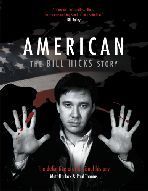
American: The Bill Hicks Story
Book Description
A fearless voice that dared to challenge the status quo, Bill Hicks ignited a revolution in stand-up comedy. From small-town Texas to the bright lights of Hollywood, this daring comic left an indelible mark on the landscape of American culture. Through laughter and raw honesty, he tackled heavyweights like consumerism, war, and the human condition, pushing boundaries and provoking thought. 'American: The Bill Hicks Story' unravels the tumultuous journey of a man who transformed pain into punchlines, battling demons both onstage and off. In a society hungry for truth, can one voice change the conversation forever?
Quick Book Summary
"American: The Bill Hicks Story" by Matt Harlock delves deep into the life and legacy of Bill Hicks, one of America’s most influential stand-up comedians. Growing up in conservative Texas, Hicks developed a fearless comedic voice, unafraid to confront controversial topics such as politics, religion, and the excesses of American culture. With sharp wit and biting social commentary, Hicks built a rebellious persona both adored and scorned by audiences and critics. Beyond the stage, the book explores Hicks’s personal demons, relentless pursuit of truth, and ultimate struggle with illness. Harlock's biography reveals how Hicks’s raw honesty and comedic brilliance ignited a cultural dialogue, turning personal pain into a catalyst for thought-provoking comedy that continues to resonate long after his untimely death.


Summary of Key Ideas
Table of Contents
Emergence of a Daring Voice
Raised in the conservative environment of suburban Texas, Bill Hicks discovered his passion for comedy as a teenager. His early years were marked by both a rapid ascent in the local stand-up circuit and clashes with authority, signaling a rebellious spirit that would define his entire career. Influenced by trailblazing comedians and the changing social landscape, Hicks started using humor as a weapon against the hypocrisies he saw in society, always searching for deeper truths and authentic experiences.
Comedy as Social Critique
Hicks’s stand-up acts became known for their raw candor and willingness to address off-limit topics, such as religion, consumer culture, war, and substance abuse. Viewing comedy as both entertainment and social critique, his sets were equal parts performance and impassioned monologue, blurring the line between stand-up and philosophical commentary. Audiences either laughed uproariously or recoiled from his unflinching takes; nevertheless, Hicks garnered a devoted cult following attracted to his refusal to compromise.
Personal Struggles and Transformation
Despite his onstage confidence, Hicks’s private life was anything but stable. He wrestled with addiction, recurring disillusionment with the industry, and the search for personal meaning amid fame and notoriety. Harlock reveals how Hicks used comedy to process personal pain, using his struggles as material for his most incisive routines. This vulnerability forged a unique connection between him and those who saw comedy as a way to confront, rather than escape, life’s difficulties.
Battling Censorship and Mainstream Barriers
A major challenge throughout Hicks’s career was breaking into mainstream recognition. Network censorship, corporate sponsors, and the sanitized demands of American television often clashed with his confrontational material. Whether being cut from shows or sparking controversy, Hicks refused to dilute his message, standing firm even as opportunities in the U.S. diminished. Ironically, he found broader appreciation in the UK and among international audiences, who embraced his daring brand of truth-telling comedy.
Legacy and Ongoing Influence
“American: The Bill Hicks Story” concludes by examining Hicks’s enduring influence on comedy and culture. Though his life was cut short by cancer at age 32, Hicks left a template for using stand-up as a force for social change and self-expression. Comedians and thinkers cite his courage and creativity as inspiration, and his work continues to surface in debates about free speech and public discourse. Harlock’s biography makes clear that while one voice alone may not change society overnight, Hicks’s commitment to honesty and fearless exploration forever altered the conversation.
Download This Summary
Get a free PDF of this summary instantly — no email required.