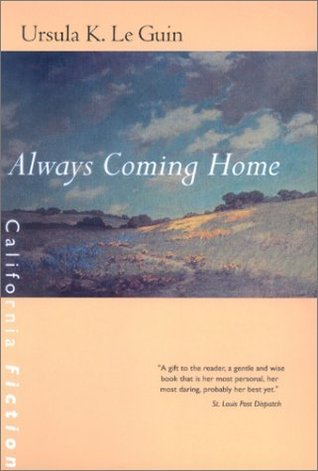
Always Coming Home
Book Description
In a world where the echoes of the past intertwine with visions of the future, a young woman embarks on a haunting journey through a land filled with myth and meaning. As she navigates the intricate web of her community’s traditions, secrets, and struggles, her very identity hangs in the balance. Love and loss collide in breathtaking landscapes, while ancient customs clash with the relentless march of change. Every choice she makes pulls her deeper into the heart of her people’s fate. Will she find her place in a world on the brink of transformation, or will she forever remain lost between two worlds?
Quick Book Summary
"Always Coming Home" by Ursula K. Le Guin is a sweeping, innovative work of speculative fiction that merges narrative, poetry, myth, and anthropology to envision a post-apocalyptic California inhabited by the Kesh people. Through the life of Stone Telling, a young Kesh woman with roots in both her matrilineal, gentle society and the patriarchal Dayao people, the novel explores identity, cultural collision, and the enduring pull of home. Interwoven stories, songs, recipes, and pseudo-ethnographic notes paint a rich tapestry of a future where humanity has adapted with humility, emphasizing connection to land, community, and memory. As Stone Telling wrestles with her dual heritage, the book becomes a meditation on tradition, transformation, and the timeless quest for belonging.





Summary of Key Ideas
Table of Contents
Cultural Memory and Identity
Set in a distant, post-apocalyptic Northern California, "Always Coming Home" centers on Stone Telling, whose dual parentage ties her to both the peaceful, matrilineal Kesh and the warlike Dayao. Her journey of self-discovery becomes a lens through which Le Guin examines the nuanced complexities of culture, heritage, and the tensions that arise from inhabiting multiple worlds. Stone Telling’s narrative is fragmented and relayed through personal memoir, ethnographic commentary, and artistic forms, encapsulating her struggles with identity, familial allegiance, and social expectation.
Conflict Between Tradition and Change
The text is not a traditional novel, but a collection of stories, poems, folk tales, rituals, and songs that collectively build the Kesh world. These primary documents, coupled with the fictional ethnographer Pandora's commentary, create the sense of visiting an entire civilization rather than simply reading about it. The Kesh are depicted as people who live in deep harmony with their valley—matrilineal, egalitarian, and committed to ecological balance. Their customs are juxtaposed with those of the hierarchical, militarized Dayao, exposing the dangers and costs of rigid, exploitative cultures.
Ecological Harmony and Community
Central to the narrative is the conflict between tradition and innovation. The Kesh value adaptation and resilience, yet are challenged by internal dissent and external threats from expansionist societies. The book probes whether transformation is necessary for survival or inherently risky. Stone Telling’s coming-of-age, encompassing her forced stay among the Dayao and eventual return to the Valley, embodies the struggle to reconcile personal agency with the pull of heritage and communal expectation.
Storytelling as Cultural Preservation
Le Guin uses the form of storytelling itself as both subject and method. Songs, myths, and even recipes serve as vessels of culture, signifying not just what the Kesh remember but how they remember. Through multiple voices and formats, readers come to understand the act of storytelling as an integral means of preserving knowledge, forging identity, and sustaining continuity across generations. Memory, in this way, is collective, nurturing, and ever-renewing.
The Search for Belonging
Ultimately, "Always Coming Home" is about the search for belonging—how individuals navigate the liminal spaces between worlds, and how societies evolve yet remain rooted in shared stories and values. Le Guin’s Kesh offer an alternative vision of civilization, one founded on empathy, ecology, ritual, and relationship. Stone Telling’s journey is mirrored in that of her people: always coming home, always in the process of becoming, and always seeking connection amidst difference and change.
Download This Summary
Get a free PDF of this summary instantly — no email required.