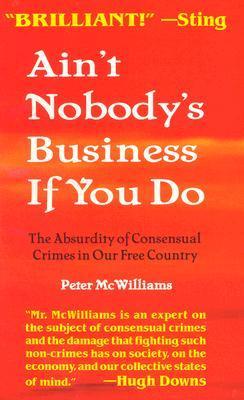
Ain't Nobody's Business If You Do: The Absurdity of Consensual Crimes in a Free Society
Book Description
What if living freely meant breaking the law? In 'Ain't Nobody's Business If You Do,' Peter McWilliams dives into the heart of consensual crimes—acts not harming others that are prosecuted nonetheless. With razor-sharp wit, he exposes the absurdity of laws that dictate personal choices, igniting a passionate debate on individual liberties and societal norms. His compelling arguments challenge conventional thinking and spark a fierce urgency to reconsider what freedom truly means. Can a society thrive on rules that govern personal behavior, or is that a path to tyranny? Join the conversation and see where you stand.
Quick Book Summary
In "Ain't Nobody's Business If You Do," Peter McWilliams delivers a powerful critique of laws criminalizing victimless acts—behaviors between consenting adults that do not harm others. With wit and research, McWilliams explores the origins and persistence of these so-called consensual crimes, scrutinizing why acts like drug use, gambling, and private sexual conduct remain outlawed in a free society. He argues that such laws are rooted more in societal discomfort and moral panic than actual harm, and that they erode personal liberties while clogging courts, empowering criminals, and undermining respect for the law. The book ultimately serves as a passionate call to question the boundaries of government intervention in private behavior and to champion individual freedom as the cornerstone of a just society.





Summary of Key Ideas
Table of Contents
The Harm Principle and Personal Freedom
Peter McWilliams frames every argument against consensual crimes around the classic libertarian notion—the harm principle. He asserts that government should only intervene when actions cause direct harm to others, not simply violate social norms or personal preferences. McWilliams meticulously outlines how laws against consensual crimes blur the distinction between morality and law, frequently prioritizing majority prejudices over individual rights. He compels readers to ask: if no one else is harmed, should private conduct be a matter of public concern?
Historical Roots of Consensual Crime Laws
Tracing the history of these laws, McWilliams reveals how many originated from religious and moral crusades intent on shaping societal behavior. Whether driven by Prohibition, drug hysteria, or campaigns against sexual minorities, such regulations were often fueled by fear and a desire to enforce conformity. The book examines how these laws evolve with society’s shifting values, yet frequently survive long beyond their original context, becoming tools of social control rather than genuine public protection.
Consequences of Criminalizing Victimless Acts
McWilliams demonstrates the dire effects of prosecuting consensual crimes. He points to overcrowded courts and prisons, wasted public resources, and empowered organized crime networks that thrive in black markets. The book underscores the ways in which these laws destabilize affected communities, amplify corruption, and selectively target marginalized groups. He argues that criminalizing victimless acts misdirects law enforcement from addressing real, harmful crimes, ultimately eroding respect for legal institutions.
Moralism as a Driver of Legislation
At the heart of the matter, McWilliams identifies moralism as the primary driver of such policy. He critiques the tendency of politicians and the public to legislate private behavior out of discomfort, fear, or moral conviction. By using law as a bludgeon for enforcing one group’s moral codes, society risks betraying its foundational ideals of tolerance and pluralism. McWilliams unpacks how this ongoing dynamic distorts public debate and weakens civil liberties for everyone.
Towards a Freer Society: Policy and Social Change
Concluding, McWilliams advocates for sweeping reform. He calls for an end to laws that punish consensual, victimless acts and urges readers to defend personal autonomy as essential to democracy. By highlighting international examples, legal precedents, and philosophical arguments, the book makes a stirring case for shifting the legal and moral framework towards respect for individual liberty. McWilliams’ work remains a rallying cry for policy makers and citizens seeking to reclaim freedom from the overreach of moralistic legislation.
Download This Summary
Get a free PDF of this summary instantly — no email required.