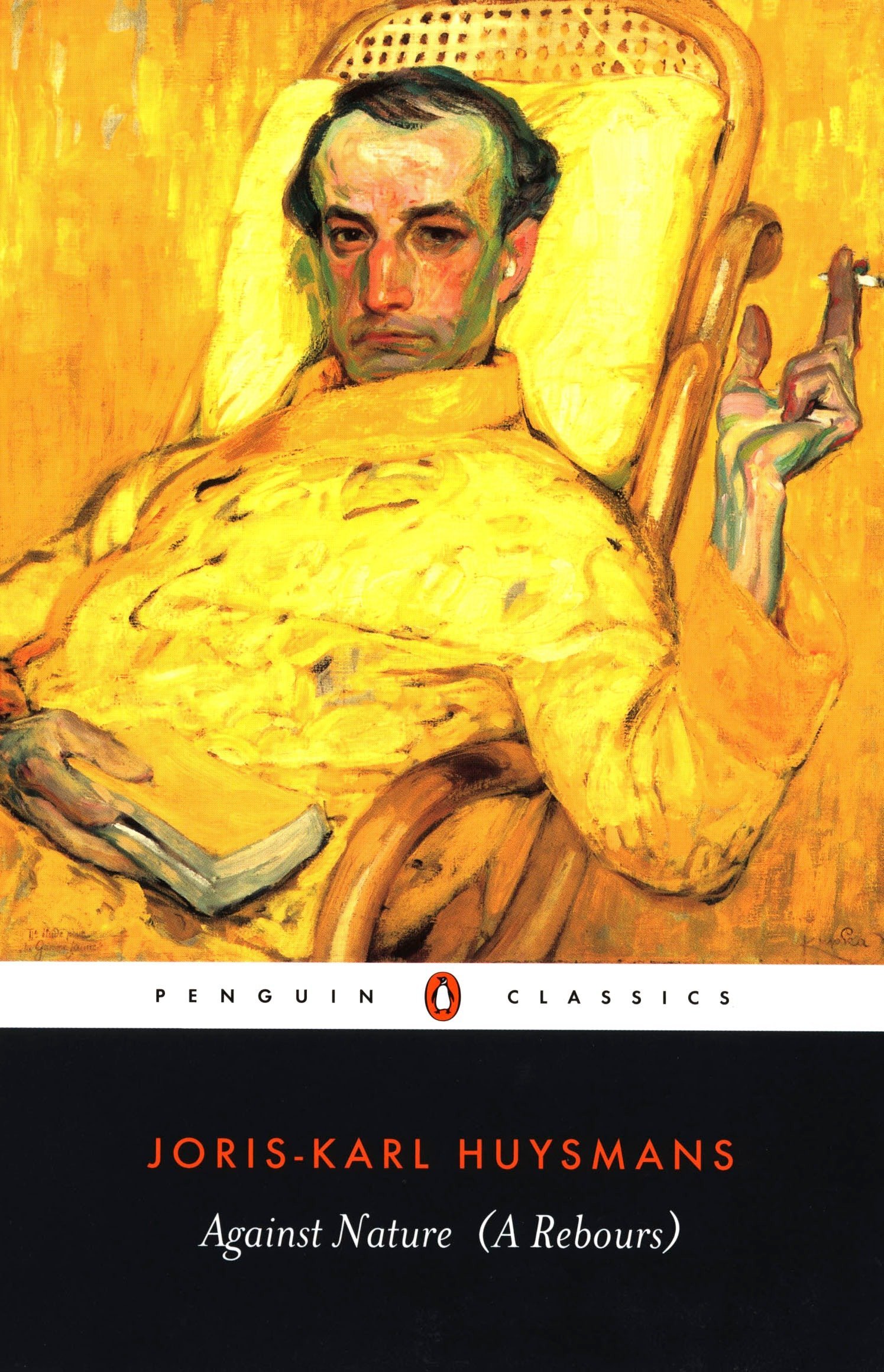
Against Nature
Book Description
What if indulging in life's most exquisite pleasures led to the brink of despair? In 'Against Nature,' the enigmatic Des Esseintes retreats from the mundane Parisian world, immersing himself in an opulent, decadent sanctuary where art, beauty, and hedonism reign. As his senses ignite in a kaleidoscope of sensory overindulgence, tension mounts between his cherished fantasies and the dark forces of reality lurking at the edges of his isolation. Will the pursuit of a life steeped in art and aesthetics shield him from the inevitable clash with existence, or will it unravel completely? What price does one pay for ultimate beauty?
Quick Book Summary
"Against Nature" (À rebours) by Joris-Karl Huysmans is a seminal work of 19th-century French literature that chronicles the escapist journey of Jean des Esseintes, an eccentric and aristocratic aesthete. Sickened by the vulgarity and monotony of modern society, Des Esseintes retreats to the seclusion of his sumptuous suburban villa. There, he surrenders himself entirely to sensory and intellectual pleasures, collecting rare books, experimenting with perfumes, and creating artificial gardens—all in pursuit of the sublime. However, his excessive devotion to artifice and beauty gradually unmoors him from reality. As Des Esseintes confronts psychological and physical decay, Huysmans probes themes of isolation, decadence, and the limits of aestheticism, raising profound philosophical questions about the pursuit of meaning and the dangers of extreme individualism.



Summary of Key Ideas
Table of Contents
Isolation as a Response to Modernity
Jean des Esseintes, the novel's protagonist, is a disenchanted aristocrat turned social recluse. Disgusted with society's mediocrity and the rise of bourgeois values, he abandons Paris for an isolated estate. There, he constructs a closed world dedicated to his refined tastes, curated experiences, and rejection of all things natural. This deliberate withdrawal represents a deeply personal, yet symbolic, rebellion against the conventions and expectations of modern life, making Des Esseintes an archetype of the decadent movement.
The Limits of Aestheticism and Hedonism
Within the walls of his sanctuary, Des Esseintes crafts an existence based entirely on artifice, surrounding himself with exquisite art, rare literature, sensual fragrances, and even an elaborate indoor garden of metallic and waxen flowers. Huysmans meticulously details his protagonist’s cultivated tastes and obsessive quest for sensory novelty. These pursuits become ever more rarefied and eccentric, reflecting both the richness of human creativity and the risks of pursuing beauty and pleasure in isolation from the natural world and human connection.
Artifice Versus Nature
Des Esseintes’s retreat into aesthetics soon reveals its limits. What begins as liberation devolves into a confining prison of ennui and hypochondria. His ever-greater efforts to manufacture extraordinary experiences ultimately yield diminishing returns, mirroring the paradox at the heart of decadence: the more desperately one chases pleasure, the more elusive it becomes. The tension between his idealized world of art and the persistent realities of the body and mind intensifies, epitomizing the futility of attempting to transcend nature entirely.
Psychological and Physical Breakdown
As Des Esseintes’s physical and mental health unravel, his fantasies become nightmarish, and his carefully controlled environment turns against him. The symptoms of isolation—hallucinations, paranoia, and physical collapse—force him to confront the limitations of his experiment. Huysmans uses this degeneration to question the viability of extreme individualism and to suggest that art, while sublime, cannot fully replace life or protect against its inevitable drawbacks.
The Search for Meaning in Decadence
Ultimately, Des Esseintes is compelled to abandon his sanctuary, physically and spiritually exhausted. His retreat ends with a sense of defeat and ambiguity; he resigns himself to return to Paris, lamenting his failure to escape reality. Through this outcome, Huysmans illustrates the tragic consequences of pursuing beauty to the exclusion of everything else, probing existential questions about meaning, connection, and the delicate balance between imagination and existence.
Download This Summary
Get a free PDF of this summary instantly — no email required.