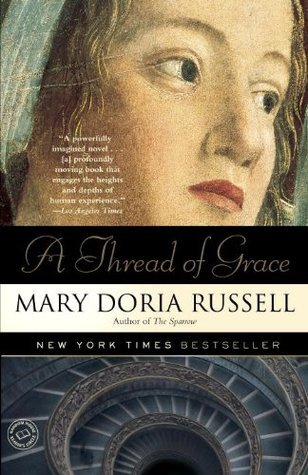
A Thread of Grace
Book Description
Amidst the chaos of World War II, a fragile thread of grace weaves through the lives of desperate souls in northern Italy. From a courageous Jewish woman fleeing for her life to the villagers risking everything to hide her, choices made in the shadows can ignite fierce loyalty or devastating betrayal. As the conflict escalates, relationships form and fracture, each decision echoing with heart-wrenching consequences. With hope flickering like a candle in the dark, can humanity triumph over the most harrowing of circumstances, or will fear snuff it out?
Quick Book Summary
"A Thread of Grace" by Mary Doria Russell is a sweeping historical novel set in northern Italy during the final years of World War II. The story revolves around a group of Jewish refugees, Italian villagers, and resistance fighters whose lives become intertwined as German forces occupy the region. Faced with imminent danger, ordinary Italians make extraordinary choices, risking their lives to shelter and protect those fleeing the Nazis. Desperation, moral ambiguity, and fleeting moments of hope thread through the narrative as characters grapple with questions of loyalty, sacrifice, and survival. Through the lens of numerous intersecting perspectives, Russell explores the profound impact of war on communities, revealing both the depths of human cruelty and the capacity for compassion amidst chaos.





Summary of Key Ideas
Table of Contents
Resilience and Survival Amid War
The narrative unfolds in the mountainous Italian countryside from 1943 to 1945, as Nazi Germany increases its grip on the region. In this setting, Jewish refugees who have recently crossed the Alps from France seek shelter and safety. Among them is Renzo Leoni, an Italian Resistance member, and Rabbi Iacopo Soncini, who help to organize safe passage and hiding places for the vulnerable. The story intricately weaves together the journeys of villagers, partisans, and foreigners, united by the common goal of resisting oppression, if only to preserve a sense of humanity amid unfathomable horror.
Courage and Moral Choices
Courage surfaces in small, everyday acts as much as in grand gestures. Local farmers and innkeepers, facing poverty and danger, must balance self-preservation with the consequences of compassion. Some risk arrest or death to harbor Jews, others must navigate loyalties torn between Nazi occupiers and their neighbors. The Italian Resistance emerges as a fragile but pivotal network, comprised of priests, aristocrats, and peasants alike, all bound by the perilous task of defying the fascist regime in both overt and subtle ways.
Community and Collaboration
Trust and betrayal become recurring motifs, shaping the fate of every character. Gratitude, suspicion, and fear mingle as trust becomes both a critical survival tool and an emotional burden. The presence of informers, opportunists, and collaborators introduces tensions that expose the complexities of human motivation. At the same time, moments of profound solidarity—whether in sharing resources or secrets—underscore the possibility of hope even as the omnipresent threat of discovery looms.
The Cost of Betrayal and Trust
War exacts a profound toll, not only through violence but in the moral injuries its survivors must endure. The village community suffers immense losses; acts of heroism are often met with tragic consequences. Yet, for every betrayal or loss, there are moments in which selfless actions restore faith in humanity. Russell does not shy away from depicting ethical ambiguity, forcing characters—and readers—to confront impossible choices where every outcome carries a price. The fragility of hope lies in the constant shadow of uncertainty, but its persistence illuminates the darkest moments.
The Fragility and Strength of Hope
In intertwining individual stories with the broader sweep of history, "A Thread of Grace" offers a meditation on the endurance of decency and the capacity for kindness in desperate times. With a focus on both personal and collective courage, Russell’s novel ultimately celebrates the resilience of the human spirit. By exploring the gray areas of loyalty, faith, and survival, the narrative affirms that even in humanity’s bleakest hours, a thread of grace can connect strangers, transform communities, and endure long after the war has ended.
Download This Summary
Get a free PDF of this summary instantly — no email required.