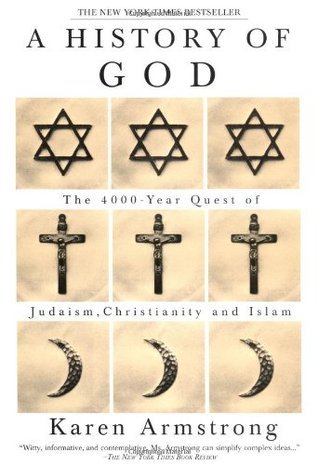
A History of God: The 4000-Year Quest of Judaism, Christianity and Islam
Book Description
What if the very concept of God has transformed over millennia, shaped by conflict, culture, and human experience? In "A History of God," Karen Armstrong takes readers on a riveting journey through the evolution of the divine within Judaism, Christianity, and Islam. Each chapter unfolds with the passion of a historical saga, revealing how faith has intertwined with power struggles and personal quests for meaning. From ancient prophets to modern dilemmas, this compelling narrative probes the deepest questions of existence. Can a fragmented world ever unite under one understanding of the divine?
Quick Book Summary
"A History of God" by Karen Armstrong explores the transformation of the concept of God over 4,000 years within Judaism, Christianity, and Islam. Armstrong investigates how evolving human societies, political climates, and philosophical shifts have continually reshaped theological understandings. The book traces the journey from early polytheisms through the rise of monotheism, examining influential figures, scriptures, and doctrinal debates. Armstrong contends that conceptions of God are less about immutable truths and more responses to human needs, anxieties, and experiences. She also delves into mystical traditions, secular challenges, and contemporary attempts to reconcile faith with the modern world. Ultimately, Armstrong offers a nuanced portrait of divinity—dynamic, complex, and deeply entwined with the human search for meaning.


Summary of Key Ideas
Table of Contents
The Evolution of Monotheism
Karen Armstrong begins by tracing the origins of monotheism, highlighting how early societies in the ancient Near East conceptualized the divine in polytheistic terms, with gods tied to natural forces and political orders. She shows how the Hebrews’ transition toward a single, transcendent God—Yahweh—emerged in response to social and existential needs, eventually forming the bedrock of Western monotheistic faiths. Armstrong demonstrates that each subsequent Abrahamic religion redefined and expanded on this foundational concept to address their communities’ shifting circumstances.
Mysticism and Interpreting the Divine
As Judaism, Christianity, and Islam evolved, each faced the challenge of articulating the nature and attributes of a singular, all-encompassing God. Armstrong discusses the development of core doctrines, such as the Trinity in Christianity and Tawhid in Islam, and addresses the many schisms that arose from interpretive conflicts. She emphasizes how power struggles, political realities, and philosophical trends influenced which ideas became orthodox and which were cast as heresies.
Theological Debates and Schisms
Armstrong explores the vital role of mysticism, showing how movements like Kabbalah, Sufism, and Christian mysticism sought direct, transformative experiences of the divine. These mystical traditions often pushed back against rigid dogmatism, offering more inclusive and transcendent understandings of God. Through mystical language and practice, believers attempted to encounter a God beyond rational comprehension, stressing love, unity, and ineffability.
The Impact of Philosophy, Science, and Secularism
The emergence of philosophical inquiry and rationalism posed new challenges. Armstrong describes how thinkers like Maimonides, Aquinas, and Muslim philosophers engaged with Greek philosophy, attempting to harmonize faith with reason. The Enlightenment and subsequent scientific revolutions fueled growing secularism, rendering traditional images of God less tenable for many. Intellectual and societal shifts forced religious traditions either to adapt their understandings or risk obsolescence.
Modern Challenges to Traditional Faith
In the modern era, Armstrong discusses how the idea of God has fractured further, with many turning to atheism or new spiritualities. Despite increasing diversity of views, she maintains that spirituality remains a deep human need. Rather than prescribing a single answer, Armstrong encourages readers to see the quest for God as an ongoing, evolving endeavor—one that mirrors humanity’s continual search for connection, meaning, and transcendence.
Download This Summary
Get a free PDF of this summary instantly — no email required.