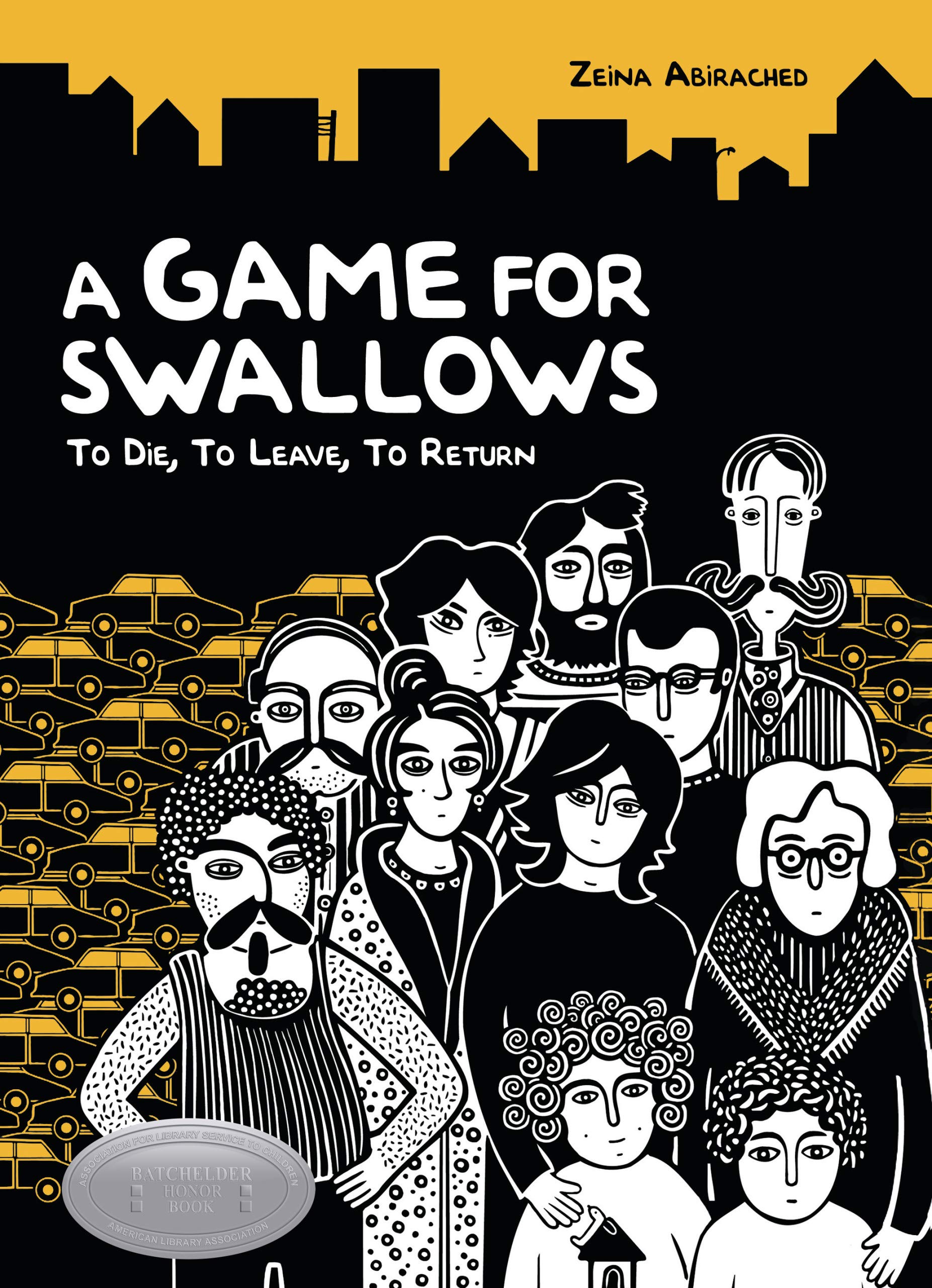
A Game for Swallows: To Die, To Leave, To Return
Book Description
Amid the chaos of war-torn Lebanon, a brother and sister find their lives torn apart as violence erupts outside their door. Swallowed by the darkness of their circumstances, they navigate the intricate tapestry of survival, memory, and love amid shattered dreams. As they cling to hope, the bonds of family become their only sanctuary. Every moment is a heartbeat away from despair or a glimmer of joy. Can they overcome the fear that threatens to keep them apart, or will the shadows of conflict seal their fate forever? The struggle to return home has never been so perilous—what awaits them on the other side?
Quick Book Summary
In "A Game for Swallows: To Die, To Leave, To Return," Zeina Abirached recounts her childhood growing up in Beirut during the Lebanese Civil War. The graphic memoir centers on a single night when Zeina and her brother are left in their apartment's safest room while their parents brave the dangerous streets outside. As bombs fall nearby, neighbors gather with the children, forging a protective circle that transforms their apartment into a sanctuary. Through stark black-and-white illustrations, Abirached captures moments of tension, humor, and profound solidarity amidst the turmoil. The narrative illuminates the resilience of community, the innocence of childhood, and the enduring hope that binds families together even as chaos rages just outside their door.


Summary of Key Ideas
Table of Contents
The Impact of War on Everyday Life
Set against the backdrop of the Lebanese Civil War, the memoir unfolds within the confines of a single Beirut apartment. Zeina and her brother are left at home while their parents go in search of vital supplies. The city outside is beset by violence, gunfire, and unpredictable danger, making every movement potentially fatal. The story is deeply rooted in the daily reality of survival, as the family and their neighbors adapt to the instability and fear that have become routine amid ongoing conflict.
The Strength of Community
As the children wait in the supposedly safest room—the foyer—neighbors drift in one by one, seeking both refuge from shelling and companionship in the darkness of uncertainty. The tight-knit group improvises ways to comfort each other, sharing stories, food, and small rituals that offer solace and distraction. Through these bonds, the apartment becomes a microcosm of resilience, demonstrating how community weaves a safety net in times of crisis. Their interconnectedness contrasts powerfully with the fracturing world outside.
Resilience Through Family Bonds
Throughout the night, moments of fear ebb and flow, punctuated by explosions and news from the outside. Zeina and her brother balance childlike curiosity and mounting anxiety, keeping each other—and the adults—grounded in the present. The adults’ efforts to maintain normalcy, with storytelling and quiet acts of kindness, help the children cope with the ever-present threat. The ongoing wait for their parents becomes a test of emotional endurance, bringing out different facets of love and courage in all present.
Coping With Fear and Uncertainty
The story is also a meditation on memory and the act of recalling small details amid catastrophe—how laughter, food, or a neighbor’s anecdote can become lifelines. Abirached’s stark illustrations reinforce themes of fragility and tenacity, with thick lines and shadowy figures capturing both the claustrophobic and protective qualities of their shelter. Memory preserves the miniature acts of resistance—playing games, baking bread—as crucial elements in surviving trauma and uncertainty.
Memory and Survival in Conflict
Ultimately, "A Game for Swallows" is an ode to survival—not just in the physical sense, but emotionally and spiritually. Despite the terror and instability, the children and their neighbors cling to hope, cherishing moments of joy and solidarity. The familial bonds that thread through the memoir highlight the importance of love in the darkest times, emphasizing that even in war, people can find ways to care, support, and protect one another. Abirached’s memoir becomes a testament to endurance, memory, and the unbreakable spirit of community.
Download This Summary
Get a free PDF of this summary instantly — no email required.