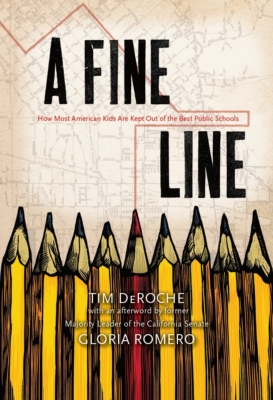
A Fine Line: How Most American Kids Are Kept Out of the Best Public Schools
Book Description
What if the future of America’s children hinges on an invisible line drawn by zip codes and privilege? In "A Fine Line," Tim DeRoche exposes the stark realities of educational inequity that leave countless kids stranded in underfunded schools, while others thrive in elite public institutions. Through compelling narratives and chilling statistics, DeRoche reveals the systemic barriers and societal indifference that shape opportunity in America. Families fight desperately for a better education, but can their voices really make a difference in a system stacked against them? The answers will challenge everything you thought you knew about public education.
Quick Book Summary
"A Fine Line" by Tim DeRoche is a critical exploration of how American public education is shaped and restricted by the invisible lines of school district boundaries. Through poignant stories and incisive analysis, DeRoche demonstrates that these lines often serve to gatekeep the best resources and opportunities for children based on geography, perpetuating cycles of privilege and disadvantage. The book exposes the system's reliance on zoning and how it systematically excludes poorer children from high-quality schools, regardless of their talents or needs. DeRoche scrutinizes the profound consequences of this structure, challenges widespread complacency, and investigates the difficult choices families and policymakers face. Ultimately, "A Fine Line" calls for reimagining a more just and equitable educational system that serves all of America's children, rather than the fortunate few.


Summary of Key Ideas
Table of Contents
School Boundaries as Barriers to Opportunity
DeRoche begins by unveiling the seemingly mundane but powerful school district boundaries that govern access to America’s best public schools. While these zoning lines are often invisible, their impact is anything but, creating sharp divides between neighborhoods and, by extension, between educational opportunities. DeRoche explains how these borders are drawn, maintained, and defended, often at the expense of less privileged families, with a bureaucratic rationale that belies their profound social consequences.
The Role of Socioeconomic and Racial Segregation
The issue of inequity is amplified by the intersection of zoning with existing patterns of residential segregation. The book details how affluent, often predominantly white neighborhoods are able to secure high-quality schools for their children, while minority and low-income families are consigned to under-resourced institutions. This system perpetuates social stratification, as children’s school options are determined more by their parents’ ZIP codes than by their own abilities or aspirations, reinforcing cycles of opportunity and disadvantage across generations.
The Human Impact on Families and Children
Through a series of compelling personal stories, DeRoche illustrates how families grapple with the realities of zoned schooling. He recounts desperate attempts by parents to secure better educational prospects for their children—ranging from falsifying addresses to extensive daily commutes. These narratives underscore the real-world consequences of an abstract system, highlighting the emotional, financial, and logistical toll on families caught on the wrong side of the line.
Systemic Indifference and Institutional Inertia
DeRoche exposes not only the systemic barriers but also the widespread indifference among policymakers and the public. He identifies how institutional inertia, fear of property value loss, and local politics sustain the status quo. Attempts at reform are often stymied by vested interests and a reluctance to disrupt advantageous arrangements. The book probes the deep roots of educational privilege and asks whether society is truly committed to fairness, or merely to the appearance thereof.
Paths Toward Reform and Educational Equity
In its concluding analysis, "A Fine Line" considers practical reforms and policy shifts that could open access to high-performing public schools. DeRoche reviews models such as open enrollment, controlled choice, and the reduction or elimination of district lines. He contends that rethinking boundaries could help dismantle structural inequities, but acknowledges the fierce resistance such efforts may encounter. The book ultimately serves as a provocative call-to-action for communities, educators, and policymakers to confront the fine lines that divide and limit American children.
Download This Summary
Get a free PDF of this summary instantly — no email required.