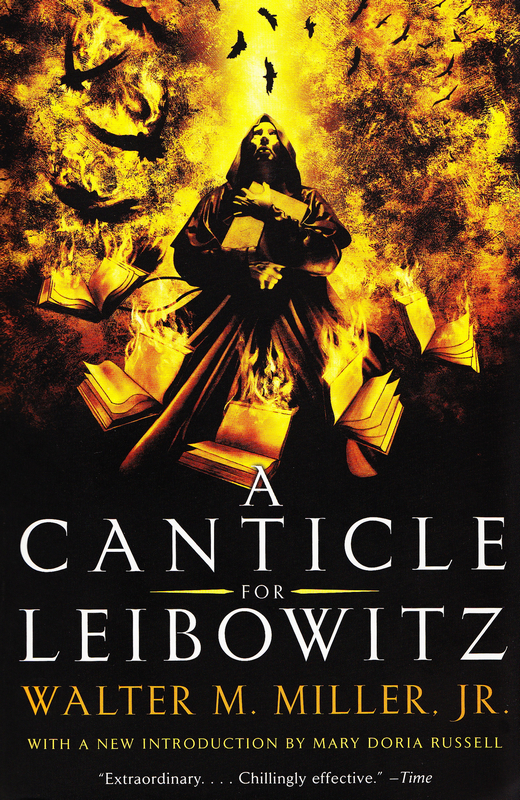
A Canticle for Leibowitz
Book Description
Amid the ashes of a post-apocalyptic world, the remnants of humanity cling to a fragile hope. In a secluded monastery, the Order of Saint Leibowitz safeguards the last whispers of knowledge while the shadows of a recurring war loom larger. As desperate forces clash over power and the future of civilization, the monks must navigate a path between faith and reason, risking everything to protect what little remains of enlightenment. Loyalties are tested, sacrifices made, and the cycle of history threatens to repeat itself. When the dust settles, what will remain of our humanity?
Quick Book Summary
"A Canticle for Leibowitz" is a sweeping post-apocalyptic science fiction novel that explores the cyclical nature of human progress and destruction through the lens of faith, knowledge, and morality. Set across centuries after a nuclear holocaust, the story centers on the Albertian Order of Leibowitz, a group of monks in the Utah desert who preserve scientific knowledge as sacred relics. As civilizations rise and fall, the Order struggles to protect intellectual heritage from ignorance and violence. The novel unfolds in three parts, depicting phases of rediscovery and the tragic repetition of humanity's failures. Through its monks’ devotion, encounters with outsiders, and profound ethical dilemmas, the novel contemplates whether humanity can learn from its past or if it is doomed to repeat its mistakes.




Summary of Key Ideas
Table of Contents
Preservation and Loss of Knowledge
After a devastating nuclear war known as the Flame Deluge, civilization collapses, leaving survivors amidst chaos and ignorance. In response, remnants of scientific knowledge are condemned and nearly wiped out in the anti-intellectual backlash called the Simplification. Within this dark age, the Albertian Order of Leibowitz is founded in the Utah desert, tasked with preserving and copying scattered remnants of pre-war knowledge, often without understanding their meanings. For centuries, the monks lovingly transcribe blueprints and technical documents, elevating the memory of the engineer Isaac Edward Leibowitz to sainthood as a martyr for knowledge. Their monastery becomes a sacred stronghold, safeguarding the fragile seeds of enlightenment as humanity languishes in barbarism.
Cyclical Nature of History
As centuries pass, civilization begins to crawl out of darkness. Rediscovery and renaissance stir, sparked in part by the relics preserved by the Order. Tensions rise as worldly powers look to exploit knowledge for dominance, even as monks like Brother Kornhoer make primitive scientific advances. The novel follows the interplay of faith and reason, embodied by figures who struggle to reconcile spiritual devotion with the rational pursuit of understanding. The Church maintains a wary guardianship, haunted by past catastrophes incited by unchecked scientific progress. This era mirrors both the medieval preservation of knowledge and the fraught rediscovery that led to the Renaissance.
Faith versus Reason
In the later epoch, technological development accelerates, and humanity rediscovers nuclear power. Now, the Order’s role is complicated: their centuries-old mission to preserve knowledge brings not only enlightenment but also the shadow of destruction. Geopolitical tensions rise as nations once again threaten nuclear war. Leaders must confront the moral burdens of choosing who should live or die, and monks debate their duties to faith, knowledge, and humankind. As city after city is obliterated in renewed atomic holocaust, the same questions of salvation, ethics, and the role of science in society resurface, echoing the earlier cycles of loss and rebirth.
Moral Dilemmas in Times of Catastrophe
Throughout the novel, individuals face profound moral dilemmas. Brother Francis strives for holiness while wrestling with pride and doubt. Abbot Zerchi must navigate the irreconcilable duties of compassion, dogma, and survival in an age of radioactive horror. The Church’s ultimate response, a plan to launch a group of colonists into space, underscores humanity’s desperate hope to escape self-destruction. Even as earthly civilization falls apart again, the spark of knowledge and faith is carried beyond the planet, suggesting that human aspiration—and the possibility of redemption—endures, however tenuously.
The Endurance of Human Hope
"A Canticle for Leibowitz" is a meditation on the persistence of hope and the tragic cycles that define human history. The monks’ struggle to balance faith and rationality questions whether society can ever learn from its mistakes. The novel finishes with ambiguity: perhaps civilization is doomed to repeat its catastrophic mistakes, but within the darkness persists a flicker of light. Human resilience, the quest for meaning, and the sacredness of knowledge survive, hinting at the possibility of transcendence despite unending turmoil.
Download This Summary
Get a free PDF of this summary instantly — no email required.