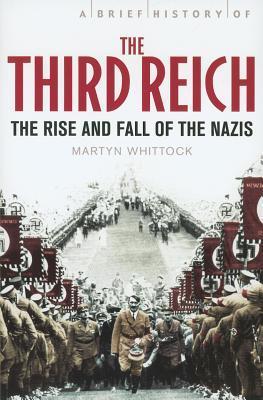
A Brief History of the Third Reich
Book Description
Amidst the ashes of a shattered Europe, a dark force rises, shattering lives and redefining history. *A Brief History of the Third Reich* unveils the chilling ascent of Adolf Hitler and the Nazi Party, detailing their ruthless quest for power and the catastrophic consequences that followed. This gripping exploration pulls back the curtain on a regime that transformed a nation into a nightmare, revealing the intricate web of propaganda, terror, and fervent nationalism. As shadows loom and hope dwindles, who could have envisioned the world spiraling into chaos? What led an entire society to follow such a dangerous path?
Quick Book Summary
A Brief History of the Third Reich by Martyn Whittock provides a concise yet immersive look into the rise and fall of Nazi Germany. The book begins with the aftermath of World War I, exploring how Germany's defeat and the harsh conditions of the Treaty of Versailles created fertile ground for extremist ideologies. It examines the emergence of Adolf Hitler, the rise of the National Socialist German Workers’ Party, and the dramatic takeover of German society through propaganda, manipulation, and terror. Whittock reveals how ordinary citizens were swept up by nationalist fervor, leading to unprecedented atrocities, including the Holocaust. The narrative delves into how the regime maintained power, orchestrated war, and ultimately collapsed in 1945, leaving a devastated nation and a transformed world. The book serves as a cautionary tale about how democracies can falter and societies can be manipulated into embracing totalitarianism.



Summary of Key Ideas
Table of Contents
The Conditions Enabling the Rise of Nazism
The story opens in post-World War I Germany, a nation burdened by economic hardship, social unrest, and severe reparations from the Treaty of Versailles. These conditions ignited a sense of national humiliation and disillusionment, which created a ripe environment for extremist voices to flourish. Whittock traces how Adolf Hitler exploited this turbulence, promising to restore Germany’s former glory, targeting scapegoats such as Jews, Communists, and other minority groups. The political chaos and failure of the Weimar Republic provided Hitler and the Nazi Party an opportunity to gain influence and position themselves as saviors of the nation.
The Role of Propaganda and Indoctrination
Central to the Nazis' ascent and grip on power was the sophisticated use of propaganda and mass indoctrination. The regime, under Joseph Goebbels, mastered the use of media—newspapers, radio, cinema, and public rallies—to mold public opinion, glorify Hitler, and instill Nazi ideology at every level of society. Education and youth organizations were repurposed to create loyal followers, while dissenting voices were suppressed. The psychological manipulation of the German public contributed to the widespread acceptance of harsh policies and the normalization of racist ideologies.
Mechanisms of Control and Terror
The maintenance of power depended as much on fear as on popular support. Whittock details the network of state terror: the Gestapo, SS, and concentration camps, which eliminated opposition and enforced conformity. The regime enforced strict surveillance, arbitrary arrests, and brutal punishments to deter resistance. This climate of fear silenced critics and made meaningful opposition extraordinarily difficult, but some brave individuals and groups did attempt to resist Nazi rule, often at great personal risk.
Society’s Complicity and Resistance
German society’s role in supporting, enabling, or resisting Nazi policies is a critical theme. While many were coerced or misled by propaganda, others actively participated in persecution and violence. Whittock examines the complex motivations behind both complicity and resistance, from opportunism and fear to moral outrage. The author sheds light on the few but significant resistance movements, such as the White Rose and the July 20 Plot, emphasizing how the regime’s control made widespread revolt nearly impossible.
The Catastrophic Legacy and Collapse
As the war unfolded, the consequences of Nazi rule became tragically apparent. The Holocaust, the devastation of Europe, and the ultimate collapse of the Third Reich in 1945 left a legacy of trauma that reshaped the modern world. Whittock concludes by reflecting on the far-reaching impacts of Nazi ideology and the importance of remembering this period as a warning. The book underscores how the Third Reich’s rise and fall illustrate the perils of unchecked authoritarianism and mass manipulation, urging vigilance against similar threats in any era.
Download This Summary
Get a free PDF of this summary instantly — no email required.